Owning a husky means that your life is full of unpredictable joys and challenges. They are energetic and curious, but at the same time they may also show behaviors such as rushing, barking, fear or over-excited when facing unfamiliar environments, crowds or other animals due to lack of socialization. Cultivating your family's "Erha" into a leisurely and confident "social cow" is not an unreachable dream. The key lies in scientific, patient and continuous social training. This "required course" not only improves the dog's quality of life, but also is the core of ensuring its safety and reducing the owner's management burden.
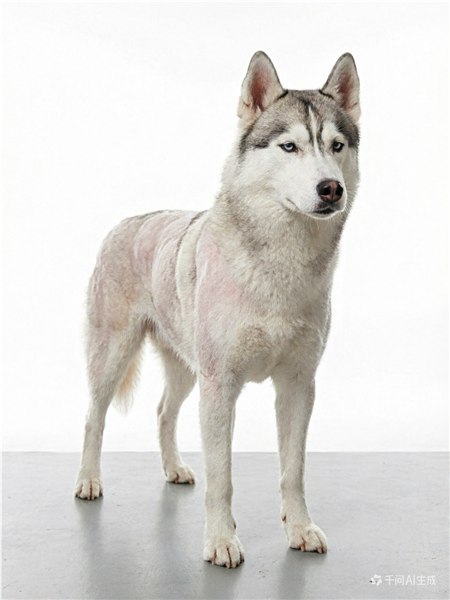
1. Understanding socialization: It's not just as simple as "going out and having fun"
Socialization, in short, allows dogs to become familiar with and adapt to various things, sounds, environment, people and other animals that they may encounter in future life through positive and positive experiences as they grow up. Its core goal is to help dogs build self-confidence, learn to respond to external stimuli in an appropriate way, and avoid aggressive or evasive behavior caused by fear or misunderstanding. For Huskies who are inherently independent and have excessive energy, good socialization can effectively guide their energy and transform potential "destructive power" into motivation to explore the world.
Many owners mistakenly believe that socialization means taking dogs out more. However, ineffective or negative social interaction (such as forcing a dog to touch something it is afraid of, or failing to intervene when it is emotional) can exacerbate the problem. True socialization isa planned, controlled, and progressive learning process oriented by the dog's positive experience.
2. Seize the golden period: a critical stage of husky socialization
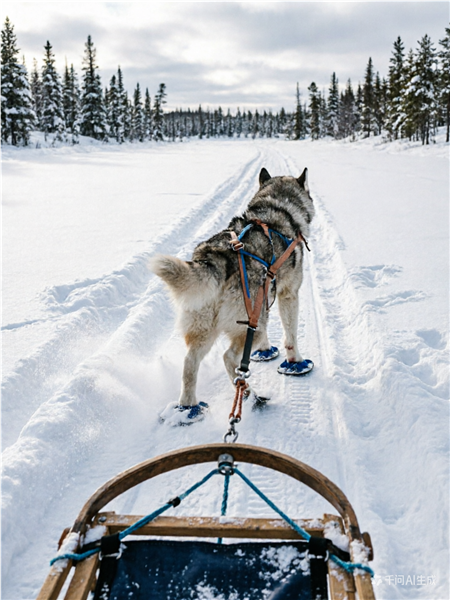
The golden period of dog socialization usually occurs between 3 weeks and 16 weeks after birth. At this stage, puppies are curious and highly receptive to new things, and the impression they leave often lasts for a lifetime.
- 3-8 weeks (puppy stage):mainly learn "dog language"(such as playing with moderation and obeying signals) from litter mates and dog mothers. At this time, you should contact gentle humans for gentle touch and interaction.
- 8-16 weeks (core socialization window):This is the best time to be exposed to various environments, sounds (vacuum cleaners, traffic noise), people of different ages and genders, friendly and healthy dogs, and other domestic animals. It needs to be carried out in a safe environment after completing the core vaccination.
- 4-6 months and above (duration and consolidation period):Adolescent huskies may become more stubborn or timid. The focus of socialization at this time is to consolidate the positive impressions of childhood and embark on more complex obedience training to manage his growing physical strength and autonomy.
Even if the golden period is missed, adult huskies can still be socially reshaped through patience and positive training, but it just takes more time and skill.
3. Practical steps of social training: a gradual journey from home to the world
Training should follow the principle of "from easy to difficult, from static to dynamic, from familiar to unfamiliar", and always put the dog's emotional state first.
Step 1: Family basics and desensitization training
Before setting foot in the outside world, lay a solid foundation at home.
- Touch desensitization:Gently touch all parts of the dog's body (ears, mouth, claws, tail) every day and reward snacks to prepare for future grooming and physical examination.
- Sound desensitization:While feeding or playing, play recorded common environmental sounds (doorbells, thunder, firecrackers, etc.) at a lower volume, and gradually increase the volume to ensure that the dog remains calm.
- Familiar with objects:Let dogs touch and explore future must-have items such as leash, chest straps, aviation boxes, and cars, and establish a pleasant connection with food and toys.
Step 2: First experience in a controllable outdoor environment
Choose a quiet, clean time period (such as early morning) when there are few people and cars to explore outdoors for a short period (5-10 minutes).
- Concentration exercise:Outside, use high-value snacks (such as boiled chicken breast) to frequently call the dog's name, reward it for looking at you, and establish a connection that "although the outside world is interesting, the owner is more worthy of attention."
- Distance observation:Sit your dog next to you and observe a slow-moving pedestrian, bicycle or another quiet dog from a distance. As long as it remains calm, continue to be rewarded with snacks. Distance is the key to controlling the intensity of stimulation.
- Solve the explosion problem:Once the dog pulls the leash, it immediately turns into a "tree stump" and stops until the rope slackens, then calls it back to reward it, and then moves on. Practice it repeatedly to make it understand that "pulling = stopping, relaxation = moving forward." Use a front buckle chest strap (such as P rope or Y chest back) to more effectively control tension.
Step 3: Contact "neutral" strangers
The goal is for dogs to understand that the presence of strangers does not mean that interaction is necessary.
- Make rules:Tell friends or passers-by in advance not to directly reach out to touch or stare at the dog, let alone swarm it. Let them ignore the dog and let the owner dominate the interaction.
- "Feed" strategy:Ask strangers to throw snacks on the ground, and let the dog decide whether to come forward to eat. If the dog is relaxed, try asking a stranger to squat down, face the dog sideways, and hand out the snack in the palm of his hand. Never force contact.
Step 4: Socializing friendly between dogs
Huskies may be very enthusiastic about their own kind, but they need to manage their interactions well.
- Choose playmates:Look for adult dogs with stable personalities and good social relations as the first meeting. Avoid two puppies or adult dogs who are not socialized playing directly.
- Parallel walks:Let the two dogs walk side by side in the same direction with a certain distance apart to familiarize themselves with each other's smells, and then slowly approach each other.
- Observe body language: Payclose attention to the dog's tail (relax and sway rather than stiff and held high), ears (relax rather than pressed back), and posture (relax rather than tight). Once there is a low roar, grinning teeth, upright fur, or excessive riding, you should immediately use snacks or toys to distract them away, interrupt the interaction and calm them down.
- Control duration:Each social play time should not be too long (10-15 minutes), and end when the dog is still not finished, leaving a pleasant impression.
Step 5: Challenge complex public places
When dogs can better cope with the above scenarios, they can try to travel to more diverse environments.
- Outdoor cafe/restaurant:Choose a quiet outdoor corner first, let the dog lie down at his feet to rest, and give it chewing toys or Kong toys stuffed with food to help it calmly pass the time.
- Pet friendly store:Enter during off-peak hours, quickly cross the shelves, focusing on practicing accompanying and attention. The novel smell in the store is a huge temptation and an excellent training opportunity.
- Transportation adaptation:Let the dog familiarize himself with stationary vehicles first, and then take a short and smooth ride. The destination is preferably a park he likes, and establish a positive association of "taking a car = going to a fun place."
4. Behavior to deal with common challenges and problems
- Fear of certain things (such as people wearing raincoats, scooters):Don't comfort or force proximity. Open a safe distance and immediately reward the dog when he sees the object but does not show fear. Gradually shorten the distance and repeatedly pair scary things with beautiful things (snacks).
- Over-excited and unable to calm down when going out:Before going out, ask your dog to complete a simple command (such as "sit") and remain calm for a few seconds before opening the door. If you rush immediately after you go out, go back into the door and start again. This establishes the rule of "Calm = Go Out".
- Be unfriendly to certain dogs:Accept that not all dogs can be friends. Respect the dog's preferences, and when encountering individuals it obviously doesn't like, decisively lead them away without having to force socialize. You can try the above-mentioned "parallel walks" to improve your relationship.
5. The core principle that runs through the beginning: positive guidance
Throughout the socialization process, please be sure to abandon punitive thinking. Slaming, beating, or yanking the leash will only cause the dog to associate unfamiliar environments, people, or dogs with "bad things" and increase fear or aggression.
- Reward whatever behavior you want to see:calmly observing, voluntarily looking back at you, sitting quietly, wagging your tail to other dogs... these moments are all worth being rewarded immediately by snacks, praise or petting.
- Manage the environment well:When you predict that environmental stimuli may exceed the dog's current ability to withstand (such as the dense sound of firecrackers during festivals), decisively avoid them and don't let them "carry them on." Success is the accumulation of countless small victories.
- Maintain patience and consistency:Socialization is not a one-time lesson, but a lifestyle throughout your dog's life. 2-3 short and intensive training times a week is far better than a long-term, high-intensity "bombing".
Cultivating a husky into a well-socialized dog is a long-term investment full of love and wisdom. Every patience and every correct guidance you give is building a safer, broader and happier world for it. When your husky can stroll calmly through the bustling streets, say hello to neighbors in a friendly manner, or enjoy a leisurely afternoon with you in a cafe, you will truly feel that all the effort is worth it. Remember, the goal is not to create a perfect dog, but to help your partner integrate confidently and happily into your life in its unique "two-ha" way, and write more beautiful chapters of adventure together.