If you think that raising a dog is just as simple as feeding and walking every day, then the husky's hair shedding season will teach you a shocking lesson. There are many jokes circulating on the Internet about huskies losing their hair: "It falls twice a year, for half a year at a time","It snowed at home, but it still fell gray snow","It's not a dog, it's a walking dandelion maker." Behind these ridicule is the summary of countless husky owners 'blood and tears (as well as Mao). So, how scary is the husky's hair shedding season? How should we scientifically manage their proud but troublesome "double coat"? This article will reveal the truth and provide you with a complete set of coping strategies.
Chapter 1: Understanding the Husky's "Horrible" Hair Loss Season
Huskies, as Siberian sled dogs, have their trademark thick coat that is their ultimate weapon in resisting extreme cold environments. This "equipment" consists of two parts:
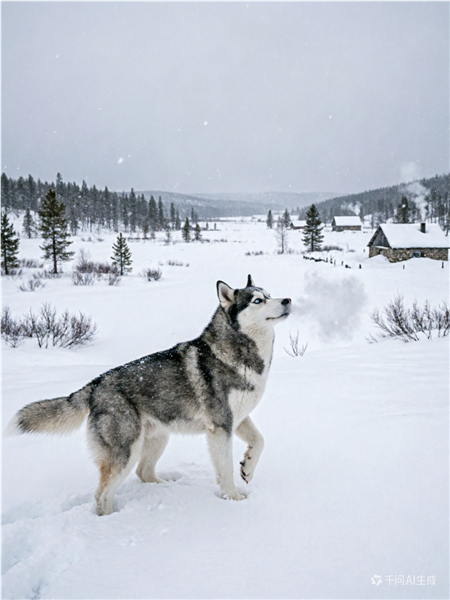
- Guard Hair: Thick, hard, smooth, waterproof, responsible for resisting wind, snow and dirt.
- Undercoat: Thick, soft and fluffy, like wool, responsible for locking in air and forming an insulation layer.
It is this double-layered structure that makes the husky "scary" during the molting season. The so-called hair shedding season mainly refers to the large-scale hair changing in spring and autumn:
- Spring molting (about March to May): In order to welcome the hot summer, the husky will frantically shed off the thick inner fluff, leaving only the relatively sparse outer needle hair to dissipate heat. This is the most intense period of hair loss, and you will find that you can easily find a handful of fluffy fluff flying in the air like cotton.
- Autumn molting (about September-November): In preparation for winter, they shed off their thinner summer hair and re-grow a thick double coat. At this stage, the amount of hair loss is also large, accompanied by the growth of new hair.
Specific manifestations of "terror":
- The amount of hair loss is astonishing: During non-molting periods, huskies also lose a small amount of hair every day. But during the molting season, the amount of hair loss increases exponentially. You may wonder how such a small body can hide endless hair. Their hair may appear in cracks in sofas, corners, clothes, and even meals.
- Hair is pervasive: Husky's fluff is very light and thin, easily floating in the air, and then attached to furniture, curtains, electronic vents, etc. anywhere you can think of or not expect. Even if you clean every day, the next day it will still be "spring breeze and fresh again".
- Form "hair balls" and "hair balls": If not combed in time, the fallen fluff will be entangled under the outer needle hair, forming a thick felt, which not only affects the appearance, but also hinders skin ventilation, which may lead to skin diseases and parasites. Breeding and overheating.
- Not friendly to allergens: Although husky is not the most sensitizing dog breed, such a large amount of hair and dander scattered in the environment is undoubtedly a serious challenge for family members with respiratory allergies or pet allergies.
Understanding this "terror" is the first step in successfully responding to it. Next, we will enter the actual combat segment.
Chapter 2: The "Arsenal" of Scientific Management: Necessary Combing Tools
If a worker wants to do something well, he must first sharpen his tools. To deal with the husky's double coat, an ordinary comb is simply a mantis trying to stop a chariot. You need a set of professional equipment:
- Pin Brush:The main force in daily use. There are rounded heads at the top of the comb teeth to prevent scratching the skin. It is suitable for daily combing of the outer needle hair and untying the small knots to make the coat smooth and shiny. It is recommended to use it every day or every other day.
- Undercoat Rake: Thecore weapon of the fur changing season! Its comb teeth are long and sparse, with rounded tips, which can easily penetrate through the outer needle hair and reach the dense inner fluff, scraping out a large amount of fluff that has fallen off but is still stuck in the fluff. When using, the movements should be gentle and combed in the direction of hair growth. This is the most effective tool to reduce flying hair at home.
- Shedding Blade: A toothed metal sheet or rubber sheet that is very effective in removing outer dead hair and loose fluff. It is especially suitable for use before bathing or during preliminary combing outdoors.
- Mat Splitter: If you have unfortunately formed knots, never pull them hard. Carefully divide the large hair knots into small pieces with a knot opener and slowly comb them apart to avoid pulling on the skin and pain.
- High-quality pet hair dryer or water blower: After taking a bath, use a hair dryer with a needle comb, and comb while blowing. You can blow out a large amount of fluff hidden deep, achieving twice the result with half the effort. The blower has stronger wind power and higher efficiency, but it is also noisy and needs to be adapted to it in advance.
Suggestion for the order of using the tools: first use a bottom wool comb to clean a large amount of inner floating hair-> then use a needle comb to comb the whole thing smoothly-> If there are knots, use a knot opener to handle it-> Finally check.
Chapter 3:"Practical Practice" of Scientific Management: Combing and Bath Process
1. Daily and changing season combing process
- Frequency: During non-molting period, comprehensive combing at least 2-3 times a week. During the molting period, youmust comb it every day for 15-30 minutes each time.
- Location: It's best to do it outdoors, balcony or bathroom in an area that is easy to clean to avoid hair flying all over the house.
- Method:
- Keep the dog in a relaxed position standing or lying on his side.
- Follow the direction of hair growth, starting from the head and neck, and then to the back, flanks, limbs and tail.
- Move gently and do not pull hard when encountering resistance. You can comb in layers, first lifting the outer layer of hair and combing the inner layer.
- Pay special attention to areas that are prone to knots, such as armpits, behind ears, inside thighs, and around the buttocks.
- Don't throw the combed wool balls around, collect and handle them centrally.
- Reward: Give snacks and verbal praise during and after grooming to allow the dog to associate grooming with pleasant events.
2. Scientific bathing and drying
- Bathing frequency: Husky skin oil secretes self-cleaning capabilities. Too frequent bathing will destroy the skin barrier, leading to dryness, itching and more serious hair loss. It is recommended to wash it every 1-2 months, and it can be added once during the molting season to help loosen dead hair.
- Must do before taking a bath: Be sure to thoroughly comb before taking a bath to remove all loose floating hairs. Otherwise, after getting wet, these hairs will form into larger felt and be difficult to handle.
- Product selection: Use pet-specific, moisturizing body wash and hair protector. Avoid using human shampoos whose pH is not suitable for dog skin.
- Key steps: blow drying and napping:
- Dry as much as possible with an absorbent towel.
- Use a hair dryer or water blower to start at low temperatures and low wind levels to allow your dog to adapt.
- While blowing with a hair dryer, use a needle comb to gently "pull" the hair against the hair growth direction (opposite to the usual combing direction), and use a hair dryer to blow the roots. This "galling" action can maximize the inner layer of fluff hidden near the skin.
- Make sure your whole body is completely dry, especially at the joints of your toes and folds of your skin. Moisture can cause skin diseases.
Chapter 4:"Logistics Support" for Scientific Management: Food and Environment
Hair health comes from the inside. Only by combining external care with internal conditioning can we cure the symptoms and root causes.
1. diet nutrition
- High-quality protein: The main component of hair is keratin. Adequate and easily absorbed high-quality protein (such as chicken, fish, beef, etc.) is the cornerstone of healthy hair.
- Omega-3 and Omega-6 fatty acids: These essential fatty acids nourish the skin, reduce dryness and dandruff, and leave hair thick and shiny. It can be supplemented with deep-sea fish oils (such as salmon oil), flaxseed oil, etc.
- Vitamins and minerals: Vitamins A, E, B (especially biotin) and zinc are crucial for skin and hair health. Choosing high-quality dog food with balanced nutrition usually provides.
- Adequate drinking water: Ensure that dogs can drink clean drinking water at all times and have sufficient body moisture so that their skin will not dry out.
- Use nutritional supplements carefully: Under the guidance of a veterinarian or pet dietitian, consider adding products such as hairdressing powder and lecithin, but do not blindly supplement them.
2. Environmental cleaning and management
- "Hair buster" cleaning tools: Invest in an easy-to-usepet vacuum cleaner (strong suction, HEPA filter),rubber gloves(wet hands rub sofas and sheets, and hair will get together and be easy to clean),hair-sticking rollers(must-have),electrostatic dust remover.
- Frequent cleaning, talk strategy: the hair season to increase the frequency of vacuuming the whole house, focus on cleaning the dog often stay in the area. Fabric sofas and bedding can be treated with fabric tips from vacuum cleaners or covered with easy-to-clean sofa cushions/sheets.
- Air purification: Using an air purifier with HEPA filter can effectively filter pet dander and allergens floating in the air and improve indoor air quality.
- Set up a special area for your dog: such as a comfortable kennel or mat, and clean it frequently. Encourage him to rest in a fixed area and reduce the spread of hair.
Chapter 5: Special precautions and misunderstandings reminders
- Don't shave! : This is the most serious misunderstanding. The husky's double coat is a natural thermoregulation system. Shaving not only fails to fundamentally reduce hair loss (the new stubble may be more piercing), but also destroys its thermal insulation function, making dogs more prone to sunstroke (loss of insulation) in summer and more susceptible to cold in winter., the skin is also more prone to sunburn, mosquito bites and infection. Never shave a husky unless you have a serious skin condition that requires local treatment.
- Be wary of abnormal hair loss: If the hair loss is bald areata, is particularly serious locally, is accompanied by redness, dandruff, severe itching or skin damage, or is abnormally large hair loss during the non-hair changing season, this may indicate skin diseases (fungi, mites, allergies), endocrine disorders, malnutrition or excessive stress, seek medical attention promptly.
- Psychological construction of combing: For an energetic husky, letting it stand quietly for half an hour to comb may be a challenge. Carry out desensitization training from an early age, combining combing with snacks and touching. If it is impatient, it can be divided into multiple short periods and be patient.
- Consider professional beauty: During the peak period of hair changing, you can take the husky to a professional pet beauty shop for a "deep hair removal" treatment. The beautician will use professional tools and technology to efficiently clean the bottom hair, which will make it easier for you for a while.
To sum up, the husky's sheep-shedding season is indeed the ultimate test of the owner's patience and ability to do housework, and its "horror" is well-deserved. However, this is not an insurmountable disaster. By understanding the characteristics of its hair, equipping it with the right tools, establishing a scientific daily care process (frequent combing, reasonable bathing, napping and drying), and providing support from both diet and environment, you can completely control this "drizzle" within a manageable range. Remember, that beautiful "double coat" is the glory of the husky, and taking care of the trouble it brings is also part of living with this unique partner. When you master these scientific methods, you will not only have a cleaner home, but you will also help your husky maintain healthy skin and hair, making it more comfortable and happy. From then on, facing the hair-changing season, you can calmly say: "Let the hair come more violently, I have ways!"