They are also sled dogs. Why is Alaska not "two" but Huskies become emoticons?
In the dog world, there are two dog breeds that have captured the hearts of countless people because of their deep connection with ice and snow and their handsome appearance. They are the Alaskan Mallet and the Siberian Mallet (Husky). However, an interesting phenomenon has been infinitely amplified in the Internet age: Alaska, which is larger and more powerful, is often viewed as a stable and reliable "big parent" in the public's impression; and its "little brother" Husky has swept the Internet with names such as "Erha","Director of the Demolition Office", and "Expression Emperor", becoming the absolute top of the emoji world. Behind this, is there people's stereotypes or is there a scientific and behavioral basis? Today, let's take an in-depth analysis of the difference between these two sled dogs, which have the same origin but different lives.
Chapter 1: A long history-different historical missions have shaped different backgrounds
To understand the differences in their personalities, we must first trace the original intention of cultivating them. Although they are both "sled dogs", their initial work priorities and environmental requirements are subtle but critical differences.
Alaskan Malamute Dog: A heavy snowmobile
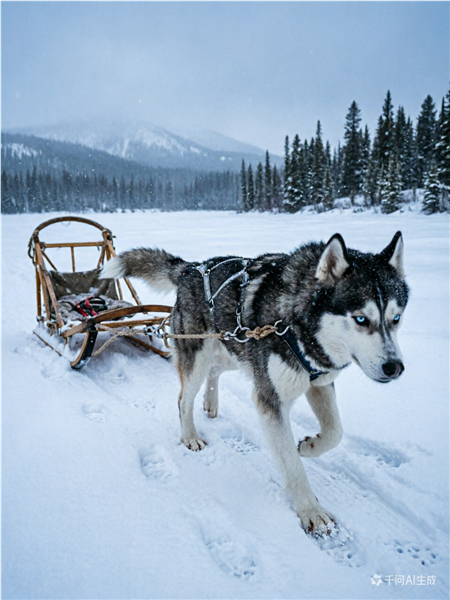
The Alaskan sled dog originated in Alaska in North America and is one of the oldest sled dogs. The core goals of their cultivation are "strength" and "endurance". The Inuit (Malemt tribe) needed a long-distance transport dog that could drag heavy game and transport large quantities of supplies. This means that Alaska must have a strong physique, a calm character, lasting endurance and a high degree of teamwork, and be able to complete long-distance travel tasks stably and reliably in extreme weather. This "heavy-duty, long-distance" nature of work requires them to be emotionally stable, relatively high in obedience, not easy to be interfered by the outside world, and have stronger concentration. Their genes are engraved with "stability" and "responsibility".
Siberian sled dog (husky): light-loaded and fast-moving snow meteor
Huskies originated from the Chukchi people in northeastern Asia. Their living environment is equally harsh, but their needs for dogs are slightly different. What the Chukchi people need are faster dogs with excellent endurance for rapid transportation and hunting over medium distances. The Huskies work more like a "snow light ranger" or a "relay runner", emphasizing maintaining faster speeds while consuming less energy. As a result, they are lighter in size and have a unique metabolism pattern. More importantly, in order to remain "working" during monotonous, arduous long runs, they are bred to be more independent, think (or more inclined to judge situations for themselves), and require higher excitement and sensitivity to the environment to cope with changing road conditions and potential prey. This "fast, flexible, and independent" gene has laid the foundation for their "unconventional behavior" in the future.
Chapter 2: Natural talents-behavioral tendencies brought about by differences in physiological structure
The differences in historical missions are directly reflected in their physiological structures, which in turn profoundly affect their behavioral patterns.
Body shape and skeleton: stable vs agile
Alaska is a large dog with strong bones, strong muscles, and a solid and powerful overall look. This body shape determines that their movements are relatively calm, and they are not as flexible as small and medium-sized dogs in turning and starting, giving people a visual feeling of "simple and honest" and "down-to-earth". The husky is a medium-sized dog with a slender but strong skeleton, smooth body lines, light and elegant. Their light body gives them great explosive power and flexibility, and they can make various difficult movements such as suddenly turning, bouncing, and twisting. These movements are precisely the best source of material for "committing second" moments and emoticons.
Eyes and Expressions: Deep vs Drama
Alaska's eyes are usually brown and almond-shaped, and their eyes tend to appear gentle, deep and even a little melancholy, consistent with its calm image. Husky's eyes are very dramatic. In addition to the common brown and blue, there are also rare mandarin duck eyes (heteropupils). Especially blue eyes, which look clear and cold, but often reveal a sense of confusion as "not very smart" or "out of body". This unique eye feature makes the husky's facial expressions extremely rich in layers. When he is happy, he squints and grins, when he is confused, and when he is bored, his eyes are empty. Every state can be interpreted by humans with an infinite sense of humor. It is easy to be cut into an emoji pack.
Tail and Posture: Curly vs Sickle
When Alaska is at rest, its tail is often curled on its back, like a fluffy feather, and when moving, it often remains curled or droop naturally, with a solemn posture. The husky's tail is more like a sickle, usually drooping naturally or in a graceful curve. It will tilt up when excited, but it will not be rolled into tight circles. When relaxed, the husky's tail drooping posture, combined with its occasional "airplane ears"(ears pressed back), makes it easier to form a funny visual effect of "counselling","aggrieved" or "doing something wrong".
Chapter 3: Character Decoding-The Chemical Reaction between Independent Thinking and Strong Energy
If appearance is the stage of "two", then character is the soul script of "two". The personality differences between the two are the core of the differentiation of their public image.
Alaska: Loyal "warm man" with high obedience
Due to the historical need to closely cooperate with humans to complete clear instructions (such as dragging heavy objects along a fixed route), Alaska has become more dependent on its owner, and compliance is relatively good among sled dogs. They are gentle and patient, are especially friendly to their families and children, and are more like a "big parent" who yearn for recognition and responsibility. Although there are times when they are naughty, their "destructive behavior" often stems from having no place to vent their energy, rather than deliberately being weird. Their thinking pattern is closer to a "straight line": I will do my best to do whatever the master tells me.
Husky: Free "soul singer" with strong autonomy
The Huskies retain more of the independent character of the original dog breed. The Chukchi people respect their independence and rely more on the dogs 'own judgment during long runs. This makes the Huskies have a high IQ (not weak problem solving ability), but poor obedience. They have their own ideas and logic, and they often "depend on their mood" when doing things. The famous "letting go" attribute is precisely because they are full of curiosity about the unknown world and have a strong desire to explore independently. Once they are freed from bondage, they will follow their own interests and turn a deaf ear to their master's call. This strong sense of autonomy often makes their behavior unexpected and appear "disobedient" and "foolish".
Energy levels and expressions: silent howling and demonic expressions
Both are extremely energetic dogs, but they have different ways of venting. Alaska's overenergy may manifest itself in constant pacing, digging holes, or slightly aggravated destructive behavior. Huskies, on the other hand, have excessive energy that can lead to extremely rich "playery" behaviors: sudden "rushing", circling in circles without warning (chasing their tails),"quarrelling" in the air,"howling" sounds like singing and howling (this is actually their way of communicating), and the most classic, using various distorted postures and rich facial expressions to express boredom, dissatisfaction or excitement. These behaviors are highly performative and ornamental, and are naturally suitable for the dissemination of Short Video and emoticons.
Chapter 4: Overview of Behavior--Scientific Explanation of the Famous Scene of "Erha"
In fact, most of the hilarious scenes of husky names on the Internet can be explained in behavioral terms.
1. "Home demolishing" behavior: This is not a problem unique to Huskies. It happens to all high-energy working dogs when there is insufficient exercise and mental stimulation. However, because of its strong biting power and independent character of "having fun on your own", the husky is often more "creative" and destructive. Alaska also demolishes, but may be more inclined to chew on large items, while Huskies may focus on "fine operations" such as hollowing out sofas and peeling off wall skins.
2. "emoticons" expression: The husky's face is muscular, with light eyes and relatively obvious whites (especially blue eyes), making any subtle expression changes easy to be captured and amplified by humans. Their "contemptuous eyes","embarrassed smiles" and "shocked faces" are often just their natural states, but they are endowed with rich emotional connotations by humans.
3. "Unusual path": such as suddenly getting stuck when walking, getting stuck in a strange place, turning a blind eye to a glass door and hitting it, etc. This is not so much "silly" as a reflection of their high degree of distraction and the instantaneous "clarity of brain circuits." They may be thinking about something else or make a wrong judgment about the physical characteristics of the obstacle in front of them.
4. "Talking" and "Wolf Howls": Huskies are dogs that don't like to communicate with typical barking dogs. They prefer to express their emotions by groaning, howling, and howling. This unique "language" sounds comedic to humans, especially when they try to "talk" or express dissatisfaction.
In contrast, Alaska's behavior is much more "regular". They may lie quietly on the ground, or place their heads against your hand for touch, and even when they play, they appear more "measured". This contrast further consolidates the public impression of Alaska as being "stable" and the Huskies as being "guilty".
Chapter 5: The magnifying glass of modern life-why is the husky the Internet celebrity?
There are also funny moments in Alaska. Why is the only husky being pushed to the throne of the "King of Emoticons"? This is inseparable from the characteristics of the modern communication environment.
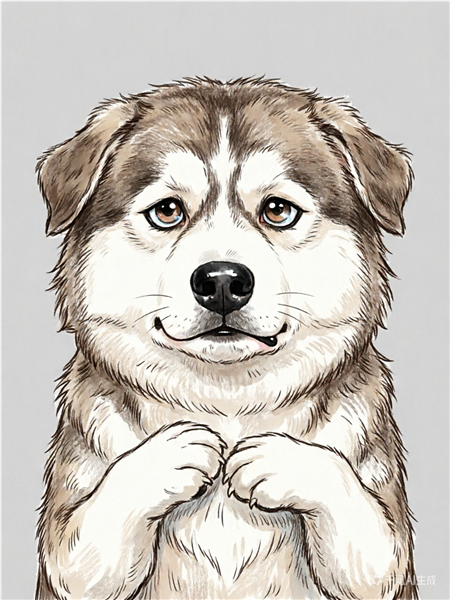
1. The appearance is more dramatic: blue eyes, rich facial expressions, and medium body size suitable for indoor shooting, which make the Huskies more expressive in front of the camera than Alaska, which has mild eyes and an oversized body (which may seem cumbersome in front of the camera).
2. The behavior is more contrasting and cute: the husky has a cold and handsome appearance like a wolf, but performs extremely funny and childish behavior. This huge contrast between "appearance and inner" is one of the core elements of Internet humor. Alaska's appearance is inherently simple and honest. No matter how funny its behavior is, the contrast is not as strong as that of a husky.
3. The temperament of "middle school" is in line with online culture: the husky's temperament of "thinking he is handsome but he is embarrassed","always out of the situation", and "using the fiercest face to do the most cowardly things" perfectly suits contemporary young people. The cultural psychology of self-deprecating, deconstructing, and seeking happiness. "Erha" is not only a dog, but also a cultural symbol, representing a free and unrestrained attitude towards life (although often overturned).
4. Popularization of breeding and breeding: Relatively speaking, as a medium-sized dog, the breeding threshold in cities is slightly lower than that of a giant dog in Alaska, making it a wider audience, so it produces more "material".
Conclusion: There are no real "two", only ununderstood needs
To unveil the Internet label, we must realize that whether it is Alaska's "sedate" or the Husky's "second", they are both projections of its thousand-year working dog gene in contemporary family pet life. Alaska still yearn for work and responsibility, while the Huskies always yearn for running and free decision-making. Most of their "problem behaviors" are the result of their primitive instincts being unable to be satisfied.
Defining huskies as "two" may be a relaxed and kind joke on their unique personality. But as a responsible pet owner, we should see their urgent need for a lot of exercise, mental challenges and correct guidance behind this. By understanding the "why" behind their behavior, we can better get along with these beautiful elves from the ice field, satisfy their nature, and also protect our furniture. Alaska is a reliable partner, and huskies are the source of happiness. They are no better than others, but add luster to our lives in different ways. The next time you see the husky's emoticons and smile, you might as well think that the ancestors of this "Erha" were once one of the most tenacious and intelligent survivors on the Siberian ice sheet.
Therefore, choosing to raise any kind of sled dog means choosing a vibrant and challenging lifestyle. Please respect their history and satisfy their nature. You will find that under the appearance of "stability" and "delinquent", what beats is the same loyal, enthusiastic and unique soul.