Among many dog breeds, the husky firmly occupies the throne of "Internet celebrity dog" with its unique appearance and rich emoticons. In particular, the eye-catching white pattern between their foreheads and eyebrows is often affectionately called the "Three Fires" by dog lovers. Many people are attracted by the domineering and handsome nature of these "three fires", but they don't know that this is not a simple color block of hair, but a key to its ancient and noble blood. Today, let us dispel the fog, deeply interpret the "three fires" between the husky's eyebrows, and explore the aristocratic blood of the pure Siberian sled dog represented behind it.
Chapter 1: What are the "Three Fires"?
First of all, we need to clarify a concept: the so-called "three fires" is a common name for dog fans for a specific white pattern on the head of husky (especially black and white). It is not an official standard term for dog breeds, but it is highly recognized among the people.
Specific form:"Three fires" usually refer to a white stripe (main fire) extending downward from the center of the forehead on the husky's face, and two shorter white stripes (side fires) on both sides above the eyebrows, forming a pattern similar to the character "Chuan" or the flame burning upward. When the husky stared or made expressions, these three white areas were particularly eye-catching, as if three clusters of cold flames were burning between his eyebrows, adding a bit of mystery and majesty to his already handsome face.
Reason for it:This is actually the result of the distribution of pigments in husky hair. Husky's coat color is controlled by multiple genes, and "Sanbahuo" is a classic expression of white facial markings (Irish Spotting or Piebald genotype). The distribution, shape and symmetry of this white pattern are one of the important visual basis for judging whether a husky is excellent in appearance and pure in blood.
Chapter 2: Looking at blood from the perspective of "three fires"-Siberian ice and snow aristocrats
Huskies, officially known as the Siberian Husky, reveal their noble origin. To understand the relationship between the "three fires" and blood, we must return to their hometown-the freezing cold Siberia.
1. Ancient Chukchi companions: Thousands of years ago, in order to survive and migrate, the Chukchi people living in extremely cold regions cultivated this sled dog with amazing endurance, tough character and strong teamwork ability. They are not only transportation, but also family members and survival guarantees. When selecting Chukchi people, they not only paid attention to the dog's physical strength, cold tolerance and obedience, but also had unique requirements for its appearance. Clear facial patterns (similar to today's "Three Fires" and masks) are easier to identify by owners in the reflection of snow, and are also in line with their aesthetic of natural elves. Therefore, excellent facial patterns are traces left by ancient breeding standards.
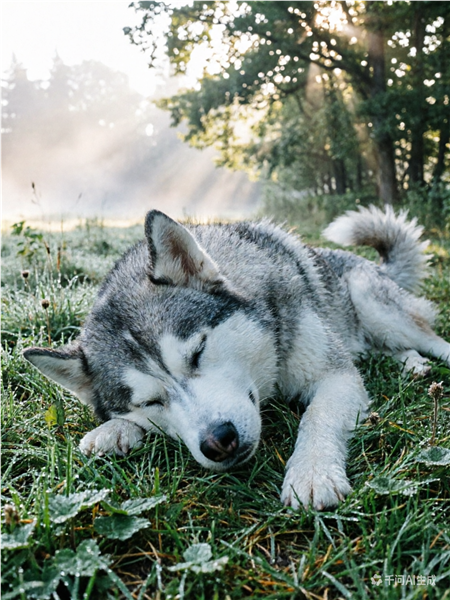
2. "ID" of bloodline: When huskies were introduced to Alaska in the early 20th century to compete in bobsleigh competitions and made a blockbuster, they began to be systematically bred and standardized. In the husky breed standards formulated by authoritative organizations such as the American Kennel Club (AKC), although it does not directly stipulate that it must be "three fires", there is a clear description of the head markings: it allows them to range from simple cranial white spots to complete "open face"(the entire face is white), and the markings are usually symmetrical. Clear, symmetrical, and proportioned facial patterns (including the classic pattern of "Sanhuo") are regarded as signs of stable blood and excellent genetic performance. A messy, asymmetrical or completely missing facial pattern may sometimes suggest that the bloodline has mixed genes from other dog breeds in its inheritance, or it may be an unstable inheritance that does not meet standards.
3. It is not the only criterion, but it is an important clue: it should be emphasized that huskies with "three fires" are not necessarily 100% purebred, and huskies without "three fires"(such as "clean face" or "cross face") are not necessarily purebred. The purity of pedigree ultimately requires a Pedigree to prove it. However, it is undeniable that the beautiful "Three Fires" pattern that conforms to the dog breed standards is highly consistent with the classic image of the primitive husky originating from Siberia in people's minds historically and aesthetically. It is one of the most visually intuitive and charming manifestations of his aristocratic blood.
Chapter 3: Beyond the "Three Fires"-A Comprehensive Understanding of the Characteristics of Aristocratic Bloodline
The true aristocratic blood is cultivated both inside and outside. In addition to the "three fires" between the eyebrows, a husky with pure blood should also have the following characteristics, which together constitute its unique "aristocratic temperament":
1. Body size and structure: Medium body size, male dog weighs about 20-27 kg, female dog 16-23 kg. The body is rectangular in proportions (the body length is slightly greater than shoulder height), and the bones are strong but by no means heavy. The entire body structure is designed for efficient and long-lasting running, with smooth muscle lines, showing a light sense of power.
2. Coat and color: It has a double coat of coat, the inner layer is thick and soft and used for insulation; the outer layer of coat is hard and straight, making it waterproof and snow proof. The coat color can be almost any color, from black to white, from brown to red, and in various combinations, and facial markings vary. But no matter what color, wool quality and double-layer structure are hard indicators.
3. Iconic head and eyes: The head has clear outline, the nose length is moderate, and the transition from skull to tip of the nose (stop) is obvious. The ears are triangular in shape, upright, and the ears are moderately spaced. The most charming thing is their eyes-which can be brown, blue, or even the rare "mandarin duck eyes"(hetero-pupils). Those eyes were clear and bright, sometimes sharp and sometimes foolish, full of wisdom and curiosity.
4. Tail and posture: The tail is like a gorgeous brush with rich hair. It droop naturally during rest, and will curl up into a sickle shape when working or excited, but will never curl onto the back (this is different from the Alaskan Malamute Dog). The standing posture and gait are confident and elegant, and the pace is smooth and labor-saving when running.
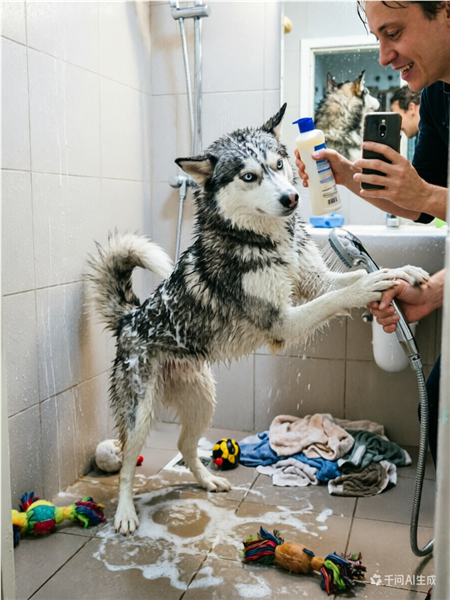
5. Character and temperament: This is the soul of blood. A pure husky is friendly and gentle, and is almost non-aggressive towards humans (may have a chasing instinct towards small animals). They are smart and independent, and sometimes seem stubborn. Extremely energetic and requires a lot of exercise. They like to howl rather than bark frequently, which stems from the communication style of wolf ancestors. That complex temperament that is both handsome as a wolf, but also naughty and docile as a child is difficult for other dogs to imitate.
Chapter 4:"Three Fires" and Bloodline Inheritance in Modern Breeding
In modern dog breeding,"Sanbahuo" has been favored by many breeders and enthusiasts because of its high recognition and aesthetics. Some excellent blood lines, such as the famous "Inuit blood line" and "Diamond blood line", have a high proportion of beautiful "Sanbahuo" patterns that stably appear in their descendants, which further strengthens the "Sanbahuo" and the association with high-quality bloodlines.
However, responsible breeders will never pursue only the single appearance of "three fires". They pay more attention to whether the dog's overall health, character stability, motor structure meet standards, and whether there is a history of genetic diseases. It is reasonable to use "three fires" as a bonus point for selecting huskies, but we must not put the cart before the horse and ignore the more fundamental elements of health, character and pedigree certificates.
It is worth noting that there are also disorderly breeding in the market to cater to the aesthetic of "three fires", and this pattern may even be fixed through inbreeding, which will lead to a significant increase in the health risks of puppies and may also be unstable in their personality. Therefore, while pursuing the "three fires", be sure to choose a reputable kennel and check the information and health certificates of your parent dogs.
Chapter 5: How do you treat a husky with "aristocratic blood"?
When you decide to welcome home an ice and snow aristocrat with "three fires" burning between your eyebrows, it means that you need to shoulder corresponding responsibilities. Their ancestry gives them unique physical and psychological needs:
1. Huge amount of exercise: They are descendants of sledding athletes and need at least 1-2 hours of high-intensity exercise (running, pulling, agility training, etc.) every day, otherwise the excess energy will be transformed into a headache for you."demolition" behavior.
2. Strict diet management: As working dogs, they need high-quality high-protein dog food. At the same time, pay attention to controlling the amount of food to avoid obesity affecting joint health.
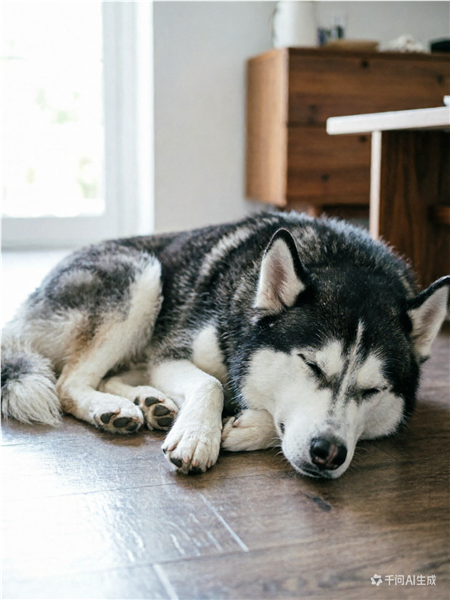
3. Continuous socialization and training: Good socialization and compliance training are crucial from an early age. They are smart but have big ideas, and training requires patience, consistency and positive motivation.
4. Dealing with hair loss and cold resistance and heat: Double coat means that the twice-a-year "molting season" is comparable to snow. At the same time, they are extremely cold-resistant but very afraid of heat, and must do a good job in preventing heat and cooling during the hot season.
5. Give enough companionship and understanding: They are essentially social animals and fear loneliness. Need the companionship and interaction of the owner. At the same time, we must understand their howling, running, and independent nature. This is a genetic memory engraved in the bloodline.
conclusion
The "three fires" between the husky's eyebrows are not only the handsome mark given by the creator, but also the blood medal that spans thousands of years and has gone from the Siberian ice sheet to the world. It burns the survival wisdom of the ancient Chukchi people and shines with the glory and tenacity of the polar sled dog. By understanding these "three fires", you will understand the tip of the iceberg of its aristocratic blood. However, true dog lovers will cherish and care for its entire vivid life through this external flame-the purity, infinite vitality and unconditional friendship to humans derived from ice and snow. When you decide to spend the rest of your life with such an "aristocrat", make sure you are prepared to give him the respect, understanding, and breadth of life it deserves. In this way, the flame between its eyebrows will always burn brightly for you.
(This article aims to popularize the physical characteristics and pedigree culture of huskies. When choosing pets, please give priority to health, character and fate, and advocate adoption instead of purchase.)