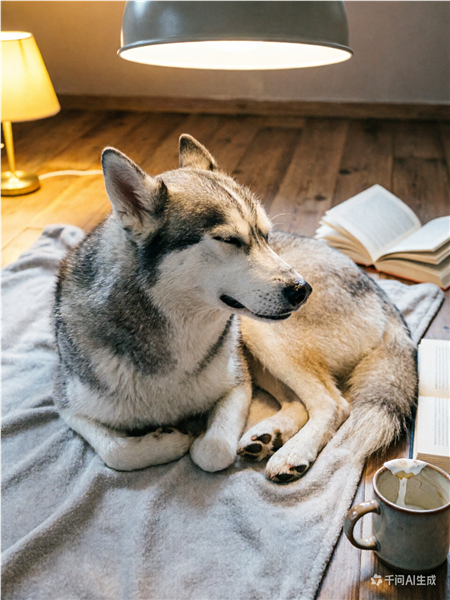
When you finish a tiring day's work and walk towards the soft sofa or cozy bed with anticipation, you often find that a familiar figure has already arrived first-your husky is lying sprawled in the center, sleeping extremely soundly, even lazily lifting his eyelids at your return. Trying to get it to move? It may purr in dissatisfaction, or simply declare in a more stretched posture,'This place belongs to me.' I believe many husky parents are familiar with this scene. Behind this seemingly naughty behavior, there is actually a profound canine behavioral code and emotional expression hidden. Today, let's take a deep look at why your husky is so keen to 'occupy' your bed and sofa. What does this mean?
1. Tracing the origin of instinct: from the head wolf in the snowy plains to the 'second leader' of the family
To understand husky behavior, we must go back to their origins. Husky (Siberian sled dog) is a working dog bred to pull sleds and travel long distances in harsh environments. Its genes are deeply imprinted with the social structure and survival wisdom of the primitive wolf pack. Among wolves, resting positions are not randomly chosen. Generally, resting spots that are higher, drier, and have a wider view (such as hilltops, rocks) will be occupied first by wolves with higher status. This not only provides better security warnings, but is also a symbol of status and authority in itself.
When huskies enter the family, they instinctively regard this human group as their 'new wolf pack.' The beds and sofas at home are undoubtedly the most comfortable and softest scarce resources in this 'territory' and are usually located relatively 'center' or 'high'(relative to the ground). Your husky jumped on and fell asleep peacefully. In its eyes, it may not be a simple 'preemption' but a complex behavioral declaration: it believes it is qualified to share or even own this high-quality resource. This does not necessarily mean that it wants to challenge your absolute leadership position as the 'lead wolf'(master). More often, it is confirming its position as a 'core member' or 'second leader' in the family. It feels safe, warm and full of your scent here, which is its way of expressing intimacy and belonging.
2. Smell mark: invisible 'declaration of sovereignty'
The dog world is a world dominated by odors. Huskies have an extremely keen sense of smell. They use their scent to understand the environment, communicate information, and establish connections. Your bed and sofa are one of the places where your personal scent is strongest-a mixture of complex information such as skin oils, sweat, shampoo, and skin care products. When the husky lies on it, its hair and sebum will naturally stay on it and mix with your scent.
This process is a profound social behavior for Huskies. By mixing odors, it strengthens the bond of 'we are family'. At the same time, from a certain perspective, this is also how it uses its own unique way to 'mark' this important place, blending your smell with your own smell, and jointly declaring its 'joint ownership' of this comfortable space. So, it is not to expel you, but to desire to 'share' with you. This odor-based attachment behavior becomes even more evident when you find that it particularly likes to sleep on the side of the pillow or position you usually sleep on.
3. Comfort and safety: the simplest survival needs
Putting aside complex behavioral explanations, one of the simplest and most direct reasons is that the bed and sofa are so comfortable! Compared to hard and cold floors, soft, elastic and excellent thermal insulation mattresses and sofa cushions can provide perfect support for joints and bring an ultimate relaxing experience. Although huskies are energetic working dogs, they also know how to enjoy themselves.
In addition, these places often mean 'safe'. In the wild, exposure to open ground during rest is dangerous. Sofas and beds are often located against the wall or in the corner of the room, providing a sense of security with a back barrier. Sleeping in the place where the owner's scent is strongest gives them great psychological comfort, as if the owner is always around to protect them. For some insecure huskies, or when no one is home, climbing into the owner's bed is a common way to relieve separation anxiety.
4. Competition for attention: 'Look at me! I'm here!'
Huskies are smart and socially demanding dogs that crave interaction and attention with their families. Sometimes they find that when they jump onto a prohibited sofa or bed, they immediately trigger a strong reaction from their owner-whether it's yelling, chasing, or trying to carry it off, it's a high-intensity interaction. For some huskies who feel bored or ignored,'negative attention' is better than 'no attention'.
They may develop 'territorial occupation' behavior into an interactive game or an effective means of attracting attention. Especially when you are reading in bed, playing with your mobile phone, or focusing on watching TV on the sofa, it swaggers over and huddles next to you and lies down, probably saying: 'Forget about that, pay attention to me!'
5. Temperature adjustment: the 'snow warrior' who is afraid of heat
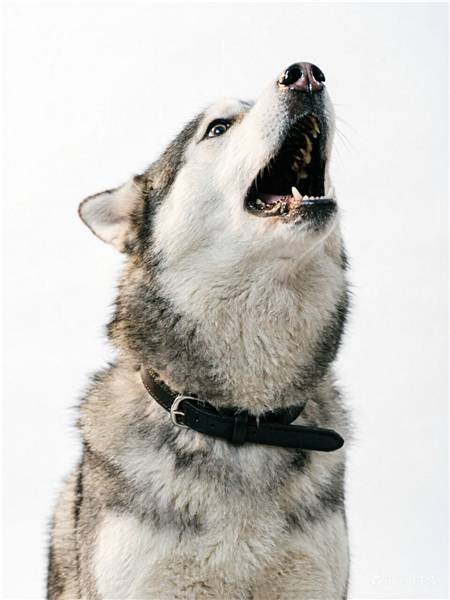
Husky has a thick double coat, which is made to withstand the severe cold of tens of degrees below zero. This means that in room temperature, they are actually very afraid of heat. The surfaces of beds and sofas (especially leather or certain fabrics) may be cooler than carpets or kennels, which will help dissipate heat. Tiled floors, while cool, are hard and usually located on the edges, not in line with their preference for a 'core resting area'. Therefore, in the season when the temperature is slightly warmer, you may find that huskies 'encroachment' on sofas and beds are more frequent, which may be their search for the most comfortable cooling point.
6. How to deal with it: Establish boundaries without hurting feelings
By understanding the reasons behind the husky's behavior, we can respond more scientifically and humanely. The goal is not to forcibly suppress or punish it, but to guide it to establish correct behavioral habits and achieve harmonious coexistence between people and pets on the basis of respecting its nature.
1. Provide more attractive alternatives
This is the most fundamental and effective method. Simply banning it from the sofa without providing equally high-quality alternatives is futile. You need to prepare an exclusive, extremely comfortable dog bed or mat for it and place it in the core areas of family activities (such as next to the sofa in the living room or next to the bed in the bedroom). Make sure the kennel is big, soft and supportive, and even spread it out with an old T-shirt with your scent. When it takes the initiative to use its own bed, give enthusiastic praise and snack rewards to strengthen this behavior.
2. Conduct clear 'permission' training
You can train the Huskies to understand the command of 'up and down'. For example, teach it to jump on the sofa only after hearing the command to 'come up' and getting your permission (such as inviting it to come up and have a little intimacy). At the same time, it must be trained to reliably execute the 'go down' command. Stay calm and firm during training and use positive reinforcement methods (snacks, touching, praise). This not only manages behavior, but also further consolidates your leadership position and makes it understand that you have the power to allocate resources.
3. Do a good job in environmental management
In the early stages of training or when you are away from home, physical isolation is the most direct approach. Closing the bedroom door or laying materials on the sofa that it doesn't like (such as tinfoil, double-sided tape, and special pet exclusion mats on the market) can effectively reduce the chance of making mistakes. Remember that management is about creating time for training, not the ultimate solution.
4. Meet its core needs
Many times, disruptive or possessive behavior stems from unmet needs. Make sure your husky has enough exercise (long runs, sniffing and exploring) and mental exertion (sniffing pads, educational toys, training games) every day. A husky whose body and brain are fully satisfied will be calmer and more willing to follow the rules, rather than venting its energy by 'destroying' or 'occupying territory.'
5. maintain consistency
All family members must have uniform rules. If it is sometimes allowed to go to bed and sometimes strictly prohibited, it will completely confuse the husky and not know what to do, and there will be no way to train. Once rules are made, they must be implemented gently and firmly.
Conclusion: Love is understanding and guidance
Huskies occupy your bed and sofa, ultimately, because they love you, trust you, see you as a leader of their community, and desire to share everything with you. This unreserved closeness is the most precious gift they give us. As masters, our responsibility is not to roughly reject this intimacy, but to regulate this intimacy within mutually comfortable boundaries through understanding and scientific guidance. When you see it sleeping peacefully on its own cot, and you can enjoy a private space that is not occupied by dog hair, you will understand that clear love and appropriate rules can build a A truly long-term, healthy and happy people-pet relationship. After all, the warmth of home lies in the fact that every member can find his or her own safe and comfortable place.