In the shares of many husky parents, we often see some pictures that are both hilarious and full of warmth: a husky carefully holds its toy teddy bear, carrying it everywhere, even when sleeping. Closely snuggle; the other is facing an empty corner, making a cadence "roar" sound, as if it is engaged in a serious conversation. These behaviors are often jokingly called the daily routine of "Erha", but if we delve deeper, we will find that they are far more than just "silly". These anthropomorphic behaviors are actually external projections of the Husky's complex inner world and strong emotional needs, and are a unique way for them to emotionally connect with the human world.
1. From wolf to partner: The genes and social code behind husky behavior
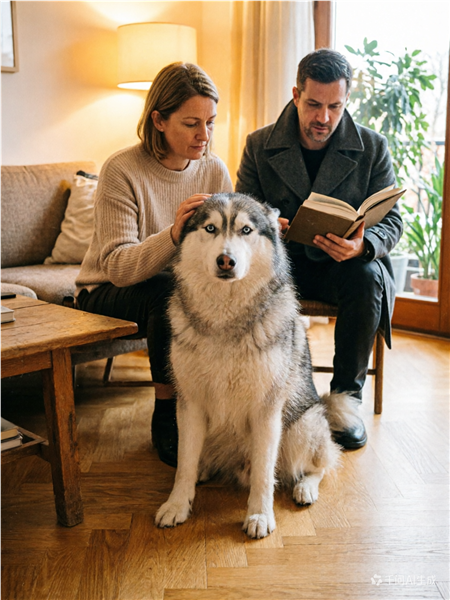
To understand the anthropomorphic behavior of huskies, we first need to trace their origins. As an ancient sled dog, the Siberian husky is deeply imprinted in its genes with the cooperation and high sociability of wolf pack society. In the harsh polar environment, teamwork, clear hierarchies and close emotional bonds are the keys to survival. This means that modern huskies are inherently "social animals" with an almost instinctive need for companionship, interaction and a sense of group belonging.
When a husky is brought into the "new ethnic group" of the modern family, it instinctively uses its ancient social wisdom to understand and adapt to the environment. However, the pace of human life and alone time are very different from the continuous interaction of wolves or dogs. This gap between needs and reality has given rise to a series of adaptive behaviors, including the anthropomorphism we will discuss. They try to fill social and emotional gaps in a way they understand.
2. Dolls are not toys: as "partners" for emotional substitution and secure attachment
Many huskies have one or more soft dolls that they particularly love. Owners may find that the dog treats this doll completely differently from other chewing toys. It does not bite roughly, but gently grasps, licks, and brings it to its nest. It may even search anxiously when going out. In animal ethology, this behavior can be regarded as the establishment of an "empathy object" or a "safe attachment".
For puppies, especially those who leave their mothers and siblings prematurely, soft dolls can simulate the body temperature and touch of their own kind, provide comfort and relieve separation anxiety. For adult huskies, especially when the owner is away from home for a long time, this doll plays the role of "replacement partner." Dogs soothe themselves and relieve loneliness through interactions with dolls-such as snuggling, guarding, and even "talking"(making a grunt). This is essentially a healthy emotional regulation mechanism. Owners should respect this connection and do not wash or replace this special doll at will to avoid damaging the dog's emotional safety zone.
3."Talking to the Air": A self-directed social rehearsal and energy release
Huskies "howling" into the air, a wall or a fixed point is perhaps one of their most famous anthropomorphic behaviors. The causes of this behavior are multi-dimensional:
1. Spillover of the communication instinct: Huskies are notoriously "chatters" who use rich sounds (not barking) to express emotions, raise needs, or initiate interactions. When they feel bored, excited, or want attention but no one responds, this strong desire to communicate may turn to an imaginary object and become a way of self-expression and emotional venting.
2. Simulations of hunting and guarding instincts: Sometimes, this behavior can be accompanied by gestures such as staring at something and leaning forward. This may be a simulated exercise of its ancient hunting instincts or territory guarding instincts. Even if there are no real prey or invaders, this "simulated behavior" can help them consume mental energy and meet some of their instinctive needs.
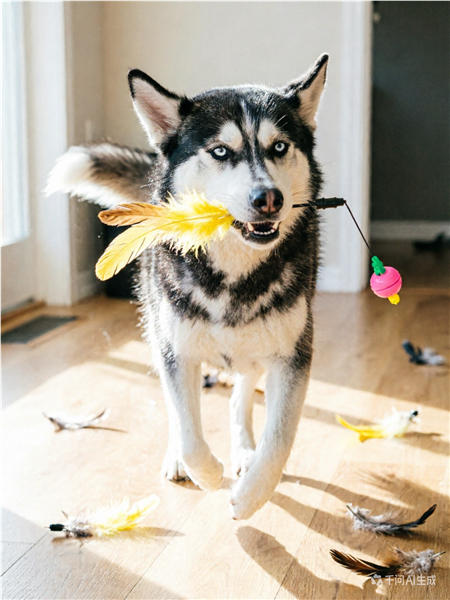
3. A clear signal to seek interaction: In most cases, this is actually the clearest invitation a dog sends to its owner: "I'm bored, come and play with me!" Ignoring this may lead them to divert their energy to more destructive behaviors, such as tearing down homes.
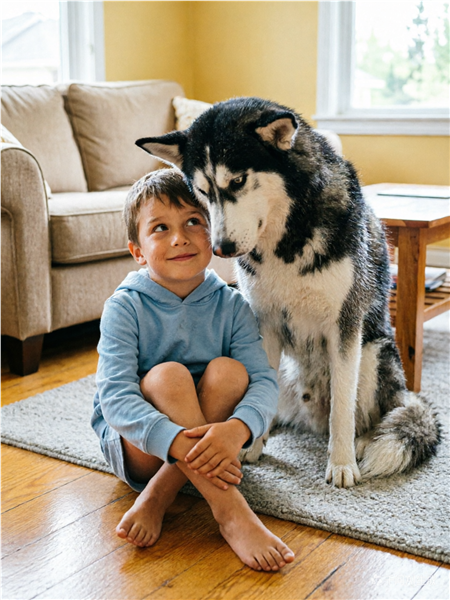
4. Emotional projection: How does the owner interpret and respond to these behavioral signals
The so-called "emotional projection" refers to the process by which an individual assigns his own emotions, wishes or ideas to external objects. In the relationship between humans and huskies, this projection is two-way. The owner will project his emotions onto the dog and regard it as a child or friend; similarly, the husky will also project his emotional needs for his companions and the group into the doll, the owner, and even the invisible air.
Understanding this is the basis for building a scientific response. When seeing these behaviors of dogs, owners should avoid two extremes: one is to completely ignore them and think it is just meaningless mischief; the other is to over-anthropomorphic and apply them with overly complex human psychology, which may misunderstand their fundamental needs.
Scientific responses include:
- Meet core social needs:Ensure that you have fixed, high-quality time for joint activities every day, such as walking, running, interactive games (tug-of-war, retrieving, etc.). These activities can not only consume his excess physical strength, but also satisfy his deep psychological needs of wanting to work together with the "leader"(owner).
- Provide environmental enrichment:When alone, prepare toys for dogs that can explore and solve problems independently, such as leaking balls, sniffing pads, hidden food toys, etc. This can shift their attention from "loneliness" and "boredom" to interesting challenges, effectively reducing excessive attachment to the doll or "talking to themselves" into the air.
- Conduct separation training:Through step-by-step training, the dog can adapt to the owner's short departure and understand that "leaving" does not mean "abandonment". You can give it that special doll or a rich toy with food when you leave, creating a positive solitude connection.
- Understand the emotions behind the behavior:When a dog "talks" into the air, observe its overall state first. Wagging his tail excitedly? Or pacing anxiously? The former can try to respond with game interactions, while the latter requires calm touching and soothing to relieve tension.
5. The boundaries of anthropomorphic behavior: Be alert to behavioral problems and mental health
While most anthropomorphic behaviors are normal and healthy, owners also need to be vigilant for signs that they may develop into behavioral problems. For example, if the attachment to the doll develops to the point where no one is allowed to touch it, or even a protective attack occurs; or "talking to oneself" is accompanied by stereotyped behaviors such as circling around, chasing the tail, or excessively licking a part of the body, this may indicate that the dog is suffering from a lot of stress, anxiety or frustration, and its needs (exercise amount, social interaction, mental stimulation) are not fundamentally met.
At this point, simply providing the doll or ignoring its "talk" is no longer enough to solve the problem. A complete reassessment of the dog's lifestyle is needed: Is exercise enough? Is social interaction (positive interaction with other dogs or people) lacking? Is the environment too monotonous? If necessary, a professional veterinarian or certified animal behaviorist should be consulted for intervention and adjustments.
6. Two-way emotional bonds: Building a healthy relationship between humans and huskies
These anthropomorphic behaviors of huskies ultimately point to one core: their desire to establish a deep, two-way emotional connection with us. They are not "ornaments" living in the human world, but social partners with ancient genes and rich emotions. Their "two" and "dramatic" behaviors are often trying their best to convey their inner world to us.
As a host, the best companionship is not only to provide food and shelter, but also to be willing to "see" and "understand" their unique behavioral language. When we learn to interpret the emotional weight of the doll it cherishes and the "speech" to the air, we are no longer just pet keepers, but truly become "members of the community" recognized by them. This relationship based on understanding and response can maximize the husky's nature, reduce behavioral problems caused by misunderstandings and mismatch of needs, and establish a lifelong friendship that is truly harmonious, fun and trusting.
So, the next time your husky comes to you with its "good friend" in its mouth or starts its "solo concert", you might as well squat down and see the world from its perspective. It's not just a doll or a boring howl, it's the heart that opens to you, full of dependence and longing. Your understanding and appropriate response will give it the best sense of love and security.