On the vast Siberian snowfield, they were once tenacious polar heroes, pulling sleds and traveling hundreds of kilometers in snowstorms, and were indispensable survival partners of the Chukchi people. However, when these blue-eyed and gray-haired "ice elves" walked into modern urban apartment buildings, their roles changed dramatically-from teamwork transporters to "demolition team captains" who caused headaches to their owners. This huge behavioral contrast is not that the husky's nature has "deteriorated", but that there has been a silent and fierce collision between its ancient behavioral pattern deeply rooted in its genes and the completely unfamiliar modern living environment.
1. The polar survival laws engraved in the genes
To understand the "demolition" behavior of modern huskies, we must first return to their origins. As one of the oldest dog breeds in the world, the Siberian sled dog's breeding goal is extremely pure and strict: to work efficiently and permanently in extremely cold and food-scarce environments. This shapes their unique set of behavioral characteristics.
The first is theamazing endurance and high energy requirements. An adult husky can easily pull a load and run dozens of kilometers in the snow every day. Their metabolic systems are optimized for long-term, low-to-low intensity aerobic exercise. This means that they inherently require a huge amount of exercise to consume physical strength and maintain physical and mental balance. For modern urban families, walking their dogs for half an hour a day may just be a warm-up.
Second, there isa strong digging instinct. On the ice sheet with tens of degrees below zero, huskies need to dig snow holes to escape snowstorms, preserve body temperature or find food that may be buried. Digging is a key skill for their survival. This instinct is completely inherited. When there is no place to dig, the carpets, floors, sofas and even corners of the home become substitutes for their "traditional skills."
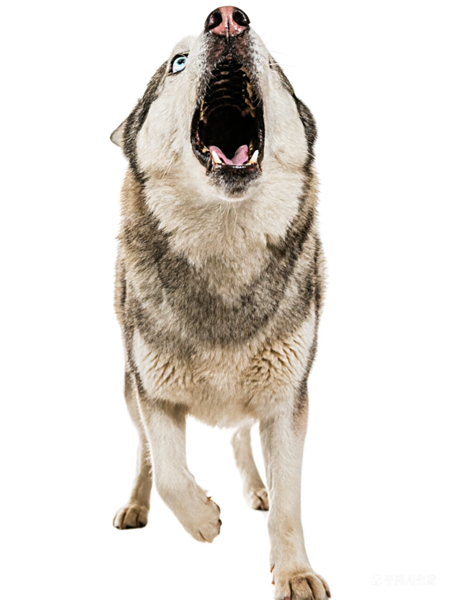
Moreover, it is ahigh degree of autonomy and a "stubborn" IQ. As sled dogs, they need to independently judge ice safety, choose paths, and respond to emergencies without immediate human instructions. This develops their ability to think independently and solve problems, but it also means that they are not as happy to follow orders unconditionally as some highly obedient dog breeds do. They will think about the "rationality" of orders. If this intelligence is not positively guided, it will be transformed into "careful thoughts" of how to open cages, open snack packaging bags, or even pry open door locks.
Finally, there isclose community and communication methods. The sled dog team is a highly collaborative group that communicates over distances through rich body language and unique howling rather than frequent barking. When alone, modern huskies may feel more lonely than other dogs. Howling has become their way of expressing anxiety and calling out to their companions, which can easily become a trigger for neighborhood conflicts in poorly soundproofed residential buildings.
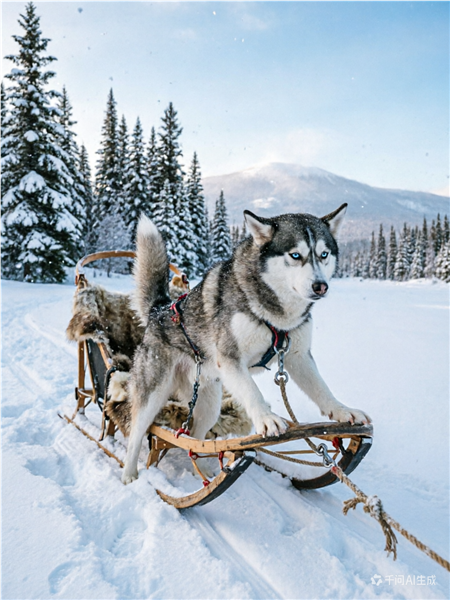
2. Modern cities: a "new polar region" full of conflicts
When entering the city with this complete "polar survival system", the Huskies face an environment that is completely misaligned in terms of physical space, social rules and lifestyle.
Space compression and energy confinement: From the vast snowfield to dozens of square meters of apartments, the activity space is sharply compressed. Their vigorous energy has nowhere to put, like athletes locked on a treadmill. The limited daily outdoor activity time is far from enough to consume the amount of exercise he genetically needs. Excess energy is like accumulated water pressure that will eventually find a weak outlet to explode-chewing on furniture, running wildly in circles, and destroying objects.
Climate discomfort and sensory overload: Husky has a double coat, which is enough to withstand the severe cold of minus 50 degrees, but is extremely sensitive to high temperatures and humidity. Summer in many cities is a torture for them. At the same time, dense vehicle noise, strangers, other animals, and various odors in the city constitute complex and continuous sensory stimulation, which may trigger anxiety or stress reactions. Destructive behavior is sometimes a catharsis under this pressure.
Change of social pattern and separation anxiety: from group life of working together with peers and owners all day long to "empty nest" state of keeping home alone for a long time. The lack of social interaction and meaningful work (sledding) makes them extremely bored and anxious. Home demolition, to some extent, has become their long boring time, ease the pain of separation "entertainment activities" and "emotional outlet."
Misplaced needs and misperceptions: Many owners treat huskies the way they treat ordinary pet dogs, failing to recognize their special psychological needs as "working dogs"-they need not only "walks" but also "tasks" and "goals." A simple walk will not satisfy his mental challenge. When owners simply blame their destructive behavior on "disobedience" or "stupidity", they miss the key to solving the problem.
3. Behavior reshaping: From "demolition captain" to "urban hero"
The core of changing the husky's behavioral patterns is not to suppress their nature, but to creatively guide and meet their ancient needs and help them find new roles and balance points in modern society.
Provide sufficient and "meaningful" exercise: Ensure at least 1-2 hours of high-intensity exercise every day. This is not just a walk, it should also include:
- Running training: Follow the bicycle and run long distances on a safe ground.
- Weight training: Use a professional dog weight vest and let them carry the right amount of weight while walking or hiking (step by step and consult a veterinarian) to simulate the working feeling of a sled.
- Dog sports: such as pulling carts, sledding (winter), dog agility (agility), cani-cross (human-dog cross-country running), etc. These activities can consume both physical and mental strength.
Conduct high-intensity mental stimulation:
- Educational toys: Tibetan food toys, food leaking balls, toys that need to be unlocked layer by layer, allowing them to use their brains while getting food.
- Obedience training and skill learning: Gamify training, learn new instructions and tricks, 10-15 minutes each time, many times a day, more effective than a long training.
- Sniff game: hide snacks or toys at home or in the park and let them rely on smell to find them. Sniffing is an efficient way for dogs to spend their brains, and 20 minutes of high-quality sniffing may be more exhausting and satisfying than an hour of walking.
Manage environments and set alternative behaviors:
- Provide huskies with a safe, durable independent space (such as a reinforced fenced area) and legal chewing toys (such as strong antlers, rubber toys) when supervision is not possible.
- If it enjoys digging, set up a "bunker" or box filled with old towels/plastic balls on a balcony or corner of the yard to encourage it to dig there.
- For the husky who will be home alone, perform a full combination of "exercise + mental" activities to make it more inclined to rest rather than demolish the house.
Meet social needs and build stable relationships:
- Arrange regular play with dogs with other personalities under safe and controllable conditions.
- The owner should become its reliable leader and partner, and establish deep trust through joint training and exploration. Stable rules and caring leadership can greatly enhance Huskies 'sense of security and reduce behavioral problems caused by anxiety.
4. Understanding and acceptance: a cooperation spanning a millennium
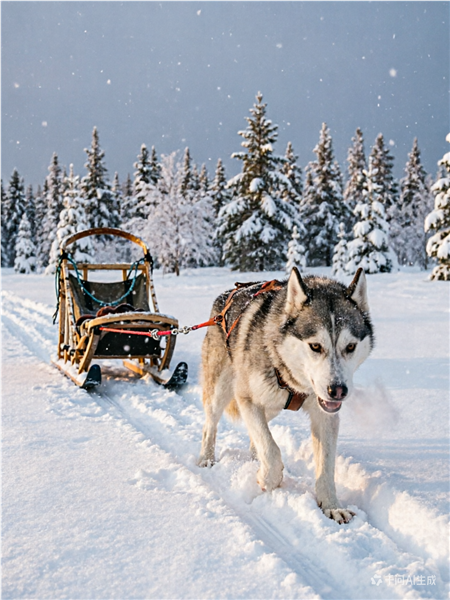
The transformation of the Husky's image from a polar hero to a demolition captain is essentially a mirror that reflects the challenges and responsibilities humans face when domesticating wild animals and introducing highly specialized working dogs into non-native environments. Most of their "problem behaviors" are expressions of normal talents in abnormal environments.
Choosing to raise a husky means choosing to take on a special responsibility: you are not accepting a pet that has been fully adapted to sofa life, you are inviting an ancient polar athlete into your family. Your task is to become its translator, guide and coach, helping its surging soul of the snowy plains find healthy and happy expressions within the framework of urban civilization.
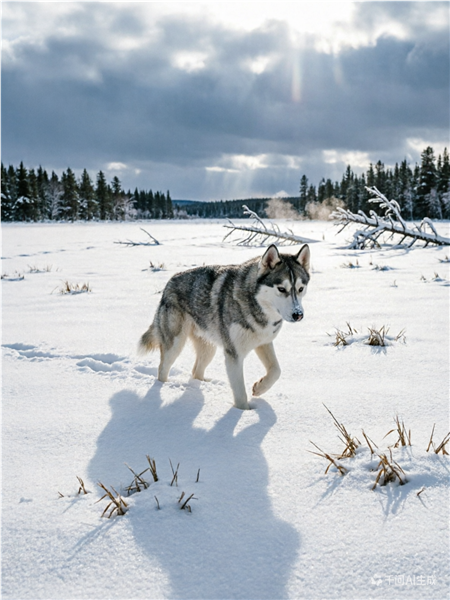
When owners are willing to devote time, energy and wisdom to meet their deep physical and psychological needs, huskies show amazing adaptability and loyalty. They can become excellent hiking companions, agile athletes, treatment dogs, and even continue to carry out sledding and patrolling work in specific areas. The persistence and intelligence that were once used to demolish homes will be transformed into a powerful motivation to learn new skills and complete new tasks.
In the final analysis, the environment changes the way husky behavior behaves, but not its core. They are still the energetic, intelligent, independent, and eager for work and companionship. From "demolition" to "construction", from destruction to creation, the key key always lies in the hands of owners who understand and respect their nature. What this cooperation spanning a thousand years requires us humans to take the first step to understand their call from the snowfield and redefine their mission as "heroes" in the reinforced concrete forest.
Therefore, the next time your husky starts planning another "interior decoration", you might want to ask yourself first: Today, have its genes received the respect they deserve? Has its infinite energy derived from the Siberian wind and snow found a glorious exit? The answer will determine whether you are facing a destroyer in urgent need of education or a down-and-down hero waiting to be understood and given new tasks.