In the dog world, the husky has won the nickname "Erha" for its handsome appearance and rich emoticons. However, what is equally famous as Yan Wei is its frightening martial arts title-"Hands Off". Once the traction rope is loosened, it seems to have received a command to freedom and turned into a bolt of lightning and left. No matter how its owner calls out hoarse behind it, it often just turns around and says,"Who are you?" With a handsome look in his eyes, and then continue to explore the sea of stars. This extremely low obedience to recall is the biggest pain in the hearts of many husky owners. Today, let's explore in depth whether this is a "character defect" or an ancient code deeply rooted in our genes.
1. Genetic branding: the soul of the ancient sled dog
To understand why the husky "let go", we must go back to its origins. Husky, officially known as the Siberian Mallet Dog, is one of the oldest dog breeds in the world. In icy and snowy Siberia, they were cultivated by the Chukchi people for long-distance sledding. The nature of this work has left an indelible mark on his character.
1. Working mode of independent decision-making: Traveling long distances on the vast snowfield and facing complex and changeable road conditions (such as ice cracks and snow drifts), the leading sled dog must have strong independent judgment and problem solving capabilities, and cannot wait for everything. Human instructions. This gene of "autonomous work" has been passed down from generation to generation, allowing modern huskies to retain a high degree of autonomy and independent thinking tendency. They do not believe that unconditional obedience is a necessary condition for survival, so they naturally lack attention to the instructions of "coming at call".
2. Endurance and running instinct: Pulling sledding requires amazing endurance and desire to run. Husky's physiological structure is built for running-efficient metabolic system, strong cardiopulmonary function, and tireless energy. When they move freely, this suppressed running instinct is instantly released. For them, the pleasure of running at full strength far exceeds the praise or a small snack they get when they return to their owners. The feeling of being as fast as lightning is a call engraved in the bones.
3. Team collaboration rather than human and dog subordination: In sled dog teams, they focus more on collaboration with their peers and cooperation with the leader dog (or human royal) rather than strict subordination. This relationship is closer to a "colleague" or "partner" than to a "master and servant". Therefore, they are vague about the concept of "absolute authority" and prefer to make the most favorable (or interesting) choice based on the current situation.
2. Character traits: strong sense of independence and curiosity
In addition to genes, the Husky's unique character combination is also an important driving force in "letting go".
1. Strong sense of independence ("cat-like" personality): Canine behaviorists often classify huskies as "cat-like dogs." They are smart, but this intelligence is often used to achieve their goals rather than to please their masters. They have their own thoughts and schedules, such as "Now I'm going to smell that tree stump" and "There's a bird over there worth chasing." When its self-agenda conflicts with your recall instructions, it will likely choose the former. It's not stupid, it just feels that your proposal is not attractive enough.
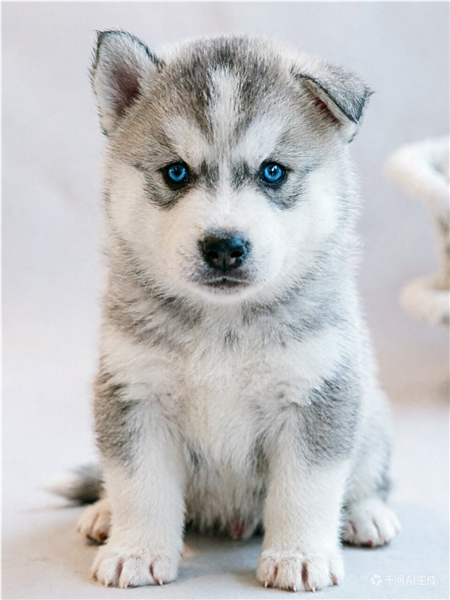
2. Endless curiosity: Huskies are explorers full of extreme curiosity about the world. A floating plastic bag, the back of a squirrel, the smell of a strange dog in the distance, and even a reflecting dot on the ground can instantly ignite its desire for exploration. Driven by strong curiosity, the value of the "reward"(novel stimulation) of the external environment is infinitely amplified, while the value of the "reward" called by the owner is dwarfed. Its attention system is highly environmentally oriented and easily diverted.
3. Obstacles and selective deafness: Huskies have amazing stubbornness. When it decides to do something, it can show amazing concentration and at the same time turn a deaf ear to its owner's call, perfectly interpreting "selective deafness". It's not a hearing problem, it's an attention allocation problem-it allocates all "bandwidth" to what it is interested in.
3. Energy level: Excess energy like perpetual motion machine
"Giving up" is also an energy management issue. Huskies are working dogs and require a huge amount of exercise every day. If daily exercise needs are not met, the accumulated energy will be like an active volcano.
1. Explosive release of energy: It may seem quiet at home at ordinary times, but once you gain freedom, the long-term accumulated energy and desire to run will explode instantly. It does not run to escape from you, but purely enjoys running itself and the pleasure of venting energy. In this state, it has almost entered a "selfless" autonomous driving mode, with instinct dominating everything.
2. "Flow" experience in sports: For huskies, running at full speed may bring a pleasant experience similar to human "flow". In this extremely pleasant experience, external sounds (including the owner's call) are automatically filtered into background noise by the brain. Calling it back is tantamount to forcibly unplugging the power while a person is immersed in his favorite game.
4. The "acclimatization" of traditional training methods
Many owners use the same method as training "flattering" dog breeds such as Golden Retriever and Labrador to train huskies, but the results often have little effect or even backfire.
1. Low sensitivity to food/toy rewards: Not all huskies are "foodies". In an outdoor environment full of high excitement and novelty, snacks that you usually like to eat may instantly lose their charm. "Give up the whole interesting world just to eat it?" In the Husky's balance, this deal is not cost-effective.
2. "Cheekness" to negative feedback: Huskies are known for their "cheekness". Severe berks and angry expressions may have little effect on them. Unlike some sensitive dog breeds, they are anxious because their owners are unhappy. Instead, they may find your emotional appearance interesting or simply ignore it. Corporal punishment is even more undesirable. It will only destroy trust and make it want to stay away.
3. Lack of deep motivation to "please the owner": Many dog breeds regard the owner's approval and happiness as important drivers of their behavior. But Huskies 'happiness stems more from self-exploration and instinctive satisfaction. "Owner is happy" may not be at the top of their ranking of values.
5. How to respond and improve: Cooperate with nature, not confront
By understanding the root causes of death, we can develop more effective strategies. The goal is not to turn it into a submissive machine, but to establish reliable safety recalls based on respect for its nature.
1. Management is better than training, safety always comes first:
- Never loosen a tow rope in an open, unsafe area. This is the iron law. You can choose a closed dog park, an open closed lawn, etc. to practice.
- Use extra long traction ropes (10-20 meters):In the early stages of training, the long traction ropes give it freedom to explore while you have the ultimate bottom line of physical control. When it is focused on something, you can interrupt its attention and guide it back by gently pulling on the leash and calling, and then give a high-value reward.
- Ensure basic obedience and attention:First at home and in a low-interference environment, closely associate the "come" command with the extremely beautiful things (such as the most advanced snacks, the most interesting toys, and the most passionate touching games). Let it understand that "come back when you hear the call" is one of the best things in the world.
2. Improve the "value competitiveness" of recall orders:
- Use a "super reward":Prepare a "dream reward" that only appears during a successful recall, such as a cooked chicken breast, a cheese stick, and a toy it loves madly but doesn't usually play with. Let the level of this reward far exceed the ordinary temptation in the environment.
- Make your return full of surprises and joy:Every time it comes back, don't immediately grab it or put on a leash (this will be seen as punishment). You should first praise enthusiastically, give super rewards, play with it for a while, and then end the game as if nothing had happened or put on the leash. Avoid letting it form the negative association of "coming back = ending happiness = losing freedom."
- Random reward method:Food is not given for every recall. Sometimes it is a crazy game of tug-of-war, sometimes it is a hearty touch, and sometimes it is a simple praise. Uncertainty will greatly increase its expectations and willingness to obey.
3. Fully meet their core needs:
- Provide enough daily exercise: Atleast 1-2 hours of high-intensity exercise (running, pulling, long hiking) every day. An exhausted husky is a good husky. After exercise, its recall compliance will be significantly improved.
- Satisfy psychological stimulation (sniffing and exploration):Take it regularly to a new environment for long sniffing walks. Smelling is the most important method for dogs to collect information. 20 minutes of sniffing is equivalent to the psychological expenditure of 1 hour of running. You can play educational games such as sniffing pads and Tibetan food toys at home.
- Build strong trust and partnership:Actively interact with it and become a provider of its interesting life, rather than just an enforcer of rules and restrictions. When it sees you as a source of happiness and security, nature prefers to come back to you.
4. Make good use of technical tools to assist:
- GPS locator:Put on the last line of insurance for "letting go". Once lost, you can quickly locate and avoid tragedy.
- Whistle training:Use a high-frequency whistle for recall training. The whistle is unique, penetrating, and does not carry the negative emotions that the owner may have due to anxiety. It works better on some dogs.
conclusion
The husky's "letting go" is not stubbornness or stupidity, but a natural expression of its ancient genes and unique character in the contemporary social environment. They are free souls born for the vast snowfields and long-distance raids. We cannot and should not completely erase this nature. As masters, what we can do is to find a balance between its free nature and our expectations of safety and controllability through scientific management, empathic training and sufficient needs satisfaction. Accept its occasional "selective deafness", appreciate its cheerful back as it explores the world, and at the same time, through hard work, make "return" an equally attractive and beautiful option in its heart. When you successfully call back a husky running in the wind, the sense of accomplishment and the trust it had when it ran towards you will be a unique and precious reward.
Remember, raising a husky is a journey to dance with smart, independent, energetic souls. It won't be your obedient pet, but it can be a unique adventure companion full of surprises and joy around you. Understanding is the beginning of all this.