In the dog world, huskies seem to always be bound to the labels of 'second',' demolishing the home', and 'letting go.' When they turn a deaf ear to their master's call, or always carry out orders with their own 'adaptations', many people will shake their heads helplessly: 'This dog is so stupid.' However, the truth is the opposite. Huskies are not stupid, they are probably the most independent thinking children around you. Equating low obedience simply with low IQ is that we are using the human thinking framework to misunderstand an ancient master of snow survival.
1. Misunderstanding in IQ testing: obedience ≠ intelligence
Common dog IQ rankings often use 'obedience and trainability' as the core criteria. Under this system, dog breeds such as border collies and poodles that can quickly understand and execute human instructions are among the best. The Huskies are usually ranked in the middle or even lower position. This gives people the intuitive impression that 'huskies are not cleve'.
But we need to revisit the definition of 'clever'. For huskies, their wisdom is not reflected in their blind obedience to human instructions, but in their excellentenvironmental judgment, problem solving ability and independent decision-making ability. This is a kind of survival wisdom. In icy and snowy Siberia, huskies hauling sleds need to face fast-changing weather, complex terrain and potential crises. The leader dog must be able to think independently, judge the safest route, and even use instinct to correct the direction and save the entire team when the human driver makes a mistake in making decisions. This 'autonomy' deeply rooted in their genes makes them unaccustomed to and unwilling to obey every order unconditionally. They think,'Does this command make sense?' Is there a better path?'' Is it safe to do this now?'
So when you call it back and it runs after butterflies, it may not seem to it to disobey, but rather to perform a higher-priority 'exploring the environment' or 'simulated hunting' mission. It's not stupid, it's its brain conducting complex cost-benefit analysis.
2. The genetic code: the ancient 'migrant workers' and the soul of freedom
To understand the Huskies 'independent thoughts, we must trace their origins. Husky is one of the oldest dog breeds in the world. It was bred by the Chukchi people and used to pull sledges long distances in extreme cold places. Their role is not to be pets, but to be crucialworking partners and survival guarantees.
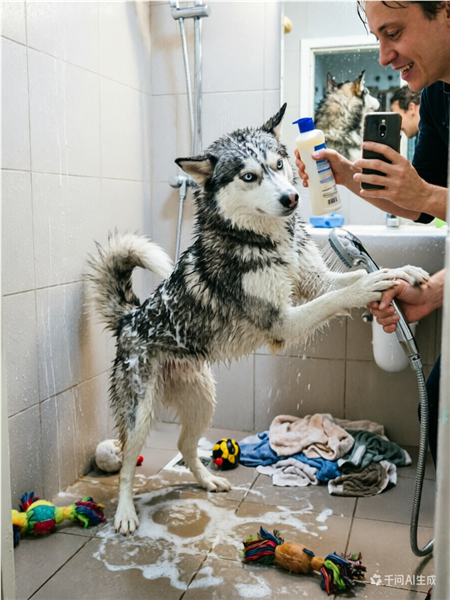
Different from collies (who need to cooperate closely with herders) and hounds (who need to obey hunters), the working model of sled dogs is that humans set the general direction (destination), and the dog team relies on its own strength, endurance, teamwork and lead dog. Judgment to complete the journey. How to avoid ice crevices, how to allocate physical strength, and how to deal with wind and snow on the way depends more on the dog's own experience and instincts. The Chukchi people respect and rely on this instinct. This cultivation history has shaped the husky's characteristics of beinghighly autonomous, being good at cooperating (with others), and maintaining a certain equal partnership with humans.
They have not been domesticated into obedient 'subordinates', but have been shaped into responsible and independent 'colleagues'. Therefore, when you try to suppress it with absolute authority, it will feel confused or even resisted, because the cooperation model written in its genes is 'consultation' rather than 'command'.
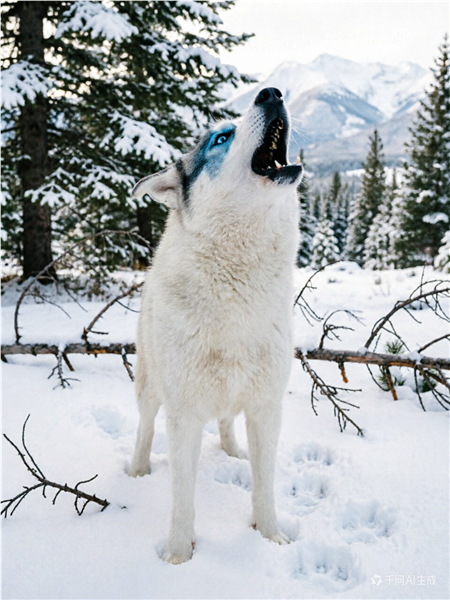
3. Decoding behavior: The logic behind 'demolishing the home' and 'letting go'
From the perspective of 'independent thinking', most of the troublesome behaviors of huskies have their own internal logic.
1. Excess energy and 'demolition':
Huskies are working dogs with amazing endurance and require hours of high-intensity exercise every day to consume energy. When the amount of exercise is seriously insufficient, the 'energy tank' they fill must find an outlet. Biting, digging, and running are natural ways to vent.' The demolition of the house is not revenge, but it is conducting 'self-arranged' physical training and environmental exploration. It is not thinking about 'how to make the owner angry', but executing autonomous procedures such as' I need to release energy 'and' This object is suitable for biting.'
2. 'Giving up' and the desire to explore:
Huskies are extremely curious, and exploring unknown territory is their vocation. The vast snowy environment makes them accustomed to long-distance raids. Once the traction is disengaged, the vast world becomes a huge 'treasure hunt' field. It was not that they didn't love their master, but at that moment, their strong instinct of exploration and desire to run overwhelmed the order to 'return to their master'. This is not forgetting, but prioritizing.
3. Selective deafness:
Huskies 'response to instructions depends on the appeal of the instructions and their current' work agenda.' If it is focusing on smelling a funny smell, your call may be judged by its brain as 'low-priority background noise'. This once again reflects their strong concentration and autonomous task management capabilities.
4. How to get along and train correctly with the 'thinker' husky
By understanding the Husky's mindset, we can adjust our strategies and move from confrontation to cooperation.
1. Build partnerships based on respect and motivation:
Give up the authoritative mentality of 'I am the owner and you are the dog' and try to establish an equal relationship of 'we are the team'. Training is not based on deterrence, butmotivation. Find what it really loves (food, toys, opportunities to go out) and make following instructions 'profitable'.
2. Make training fun and challenging:
Huskies hate boring repetition. Gamize training and incorporate brain training into sniffing, searching, obstacles and other aspects. They will enjoy activities such as agility training and cart training that can exert their original instincts.
3. Provide adequate physical and mental consumption:
This is fundamental to solving most behavioral problems. Ensure at least 1-2 hours of high-intensity exercise (running, pulling, long walks) every day. At the same time, educational toys, sniffing pads, etc. are provided to meet its psychological needs, so that its 'independent thoughts' can have a legitimate channel to play.
4. Maintain absolute patience and consistency:
The Huskies 'training curve rises in waves, and they may' forget 'if they meet today. This is not a step backward, it is testing the boundaries of the rule. You need to use unlimited patience and absolutely consistent feedback (rewards for right, ignores or gentle corrections for wrong) to make it understand that cooperation is the best strategy.
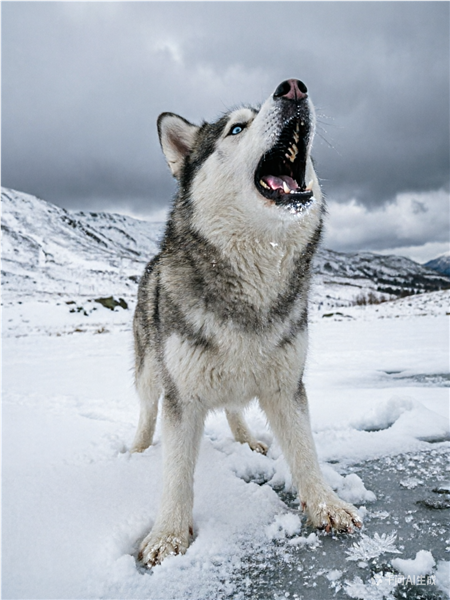
5. Make good use of 'choice':
Given limited choices, they can meet their independent needs. For example,"Do you want to play ball or Frisbee?" "Should we go from the left or the right?" Giving rewards after it makes a choice not only satisfies its 'desire to lead' but also strengthens a positive interaction with you.
5. Redefining 'cleverness': Appreciating the unique light
Owning a husky is like owning a philosophy book full of surprises. It won't obey you, but it will use funny movements to make you laugh when you are depressed; it may not remember the complex skills of pretending to be dead, but it can show an amazing calm and sense of direction when a snowstorm approaches; it may not be the most obedient guard dog, but it is inherently friendly and tolerant to its family (including children and other pets).
Its 'independent thinking' is a valuable characteristic forged by thousands of years of polar survival. When we no longer use the ruler of 'obedience' to measure it and learn to appreciate its autonomy, tenacity, curiosity and humor, we can truly understand this elf from Siberia and establish a unique and profound relationship with it. partnership. So please stop calling him 'Erha'. Perhaps we can call him more respectfully-a 'dog world thinker' with a free soul.

All in all, the husky's low obedience is by no means a symbol of intellectual impairment, but ahigh-level cognitive traitdeeply rooted in its history, genes, and work roles. They are not stupid, they are just accustomed to thinking with their own brains. As masters, our task is not to tame this idea, but to guide it, enrich it, and write a more interesting chapter in life together with this clever partner. When you accept and understand its 'independence', you will find that the joy of raising a husky lies in this surprising dialogue and dance with a free soul.