In the cute pet universe of the Internet, Huskies (Siberian sled dogs) are definitely a "top class" that cannot be ignored. They are famous around the world for their charming blue or other-colored eyes, their handsome appearance resembling wolves, and... their "not very smart" expressions that can collapse anytime, anywhere. From rolling his eyes to grinning, from sleepy to shocked, the husky contributed a large number of emoticons and was nicknamed "Erha". But have you ever wondered why the husky can always output these funny expressions so naturally and stably? The answer may surprise you: this is partly "innate" and even related to the lack of a specific muscle on their face.
1. The anatomy of expressions: the missing "frowning muscle"
To understand the expression of a husky, we first need a simple knowledge of canine facial anatomy. A dog's facial expression is mainly controlled by the skin and subcutaneous muscle groups. Among them, there is a muscle called the "zygomatic muscle" or "frowning muscle" that is crucial to shaping the "worried","focused" or "pitiful" expressions of many dogs. This muscle helps a dog pull his eyebrows inward and downward, creating a human frowning look.
However, in the facial muscle structure of huskies and some other primitive dog breeds (such as Alaskan Malamute Dogs and Samoyed dogs), this muscle is either very weak or has a different shape from common domestic dogs, or it can even be said to be "born with less material." This makes it difficult for the husky to make the classic, frowning "deep" or "aggrieved" expression.
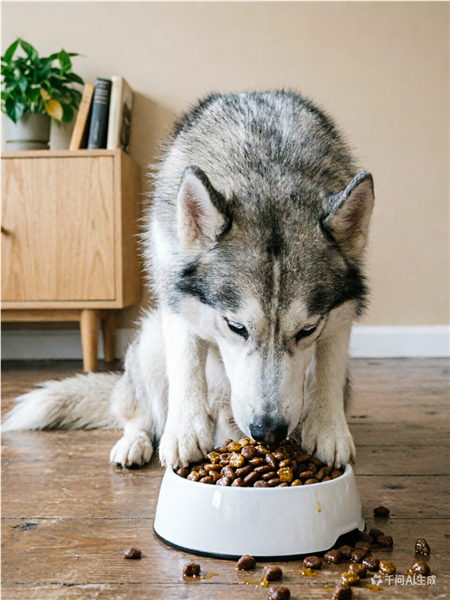
On the contrary, because they control the movement of their lips, ears, and other muscles around the eyes with great flexibility, when they try to express emotions or just relax, they are more likely to have eyebrows raised high (showing more whites of their eyes, appearing surprised), the corners of their mouths grinning back (like they are giggling), or their eyes half-open (like they are not awake). This "defect" in muscle structure just combines into what we interpret as "silly","guilty" or "absent wisdom".
2."Not very smart" is just an appearance: the true IQ of the husky
Being labeled "stupid" because of his expression is really an "unjust case" for the husky. In the well-known dog IQ rankings (based on work compliance), huskies are usually ranked in the middle range (around 45th). This ranking mainly measures the speed at which a dog learns new instructions and the probability of obeying orders for the first time, reflecting "obedience IQ" or "training sensitivity."
Huskies are not high in this ranking, but this does not mean they are stupid. On the contrary, it highlights their independence and autonomous thinking ability as an ancient working dog breed.
- Ancient wisdom:As sled dogs bred by the Chukchi people of Siberia, huskies need to pull sleds for long distances in extremely cold and poor visibility snowstorms. The leading dog only needs to independently judge the route ahead and avoid dangers such as ice cracks under fuzzy instructions from humans. This nature of work requires them to have strong environmental judgment, the ability to solve problems independently, and a tough will, rather than blindly following. This kind of "selective obedience" or "cleverness with your own ideas" has become synonymous with "difficult teaching" in modern family pet training that requires a high degree of obedience.
- Excellent problem-solving skills:Many husky owners have this experience: the kitchen door is clearly closed and the snack cabinet is locked, but the "Erha" can always find a way to open it. This proves that they have excellent observation, learning, and logical reasoning abilities, except that their wisdom is often used to achieve their goals (such as obtaining food or freedom) rather than to please their owners.
- Strong communication skills:Huskies don't like to bark, but they are very chatty dogs. They use rich howls, groans, sobs and those trademark "owls ~" sounds to express a variety of emotions, from boredom to excitement, from protests to invitations to play. This complex voice communication system is also a manifestation of its intelligence.
3. The character code behind the expression
The husky's seemingly "not very smart" face is also deeply bound to its unique character.
- Extreme friendliness and social:Huskies often show surprisingly friendliness to humans and other animals, with little aggression. Their grinning expressions are often a sign of friendliness and excitement rather than a threat. This kind of "silly white and sweet" openness makes them seem heartless.
- Infinite energy and "playfulness" nature:As a working dog, the husky has terrifying endurance. When they cannot meet the large amount of exercise they need every day (which usually requires 1-2 hours of high-intensity activity), the excess energy will turn into "home demolition" behaviors and various exaggerated "performances"-such as suddenly running a non-physical obstacle race at home, or howling into the air to produce a tragic drama. In the eyes of their owners, these behaviors add points to their "not very smart" image.
- Stubborn and free soul:Huskies are famous for "letting go". Once off the leash, they may follow their instincts, chase small animals or simply enjoy running, turning a deaf ear to their owner's call. This desire for freedom and stubborn personality, coupled with the blank or indifferent expression on their faces after they ran away, confirms the name of "two".
4. The glory of working dogs: the other side beyond the expression
Putting aside the emojis, the Huskies have a glorious page in history. In 1925, a diphtheria epidemic broke out in Nome, Alaska, USA, and the serum was thousands of miles away. In snowstorms and extreme weather of tens of degrees below zero, a sled team led by Huskies completed a 1085-kilometer life transport relay, saving countless lives. The leading husky "Balto" still has a statue of it in New York's Central Park. This "serum relay" fully proved the extraordinary courage, endurance, loyalty and wisdom displayed by the Huskies at critical moments. Under their "not very smart" faces, there is a reliable and powerful working dog heart beating.
5. How to coexist harmoniously with the "emoji king"?
After understanding the nature and intelligence of huskies, how should we get along with them as an owner or potential owner?
- Provide adequate exercise:This is the most important one. Ensure at least one hour of running, pulling or high-intensity interactive games every day. A tired husky is a good husky.
- Conduct positive, interesting training:Use their tendency to use brains and solve problems to gamify training. Agility training, sniffing games, and educational toys are all good choices. Avoid repeating boring instructions and keep training fresh.
- Take good safety protection:Strong fences and reliable traction ropes (chest straps are recommended) are must-have items. Because their "letting go" characteristic is not stupid, but instinct.
- Understand and appreciate their expressions:Learn to interpret the real needs behind their various howls and expressions, whether they are hungry or thirsty, whether they want to play or want to go out. Accept that they are dogs with unique personalities and rich expressions.
- Give them enough social:Give them the opportunity to interact with other friendly dogs and people to meet their social needs.
6. Conclusion: Is it a "design flaw" or a "cute talent"?
Back to the original question: Why do the Huskies always look "not so smart"? The scientific answer is that the unique structure of their facial muscles (such as the underdeveloped "frowning muscles") limits the presentation of certain "deep" expressions, while amplifying "dramatic" expressions such as raised eyebrows and grinning. But this is just the physical basis.
The deeper reason is that their ancient working dog genes give them an independent, stubborn, energetic and friendly and cheerful personality. These intrinsic qualities, expressed through the face with the "simplified" frowning function, produce a wonderful chemical reaction that combines into the unique complex expression between handsome and silly.
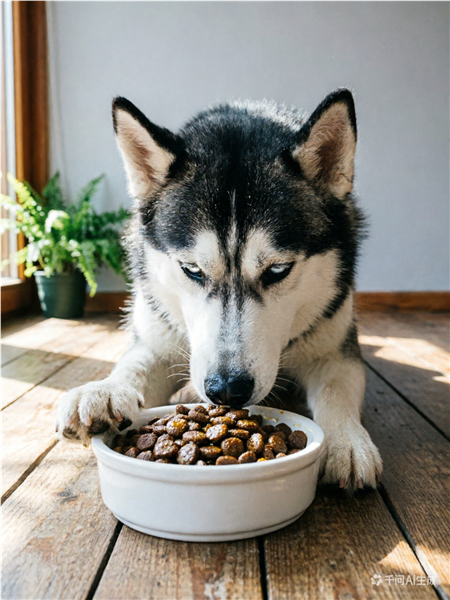
Therefore, the husky's "not so smart" face is not so much a flaw as a charming "cute talent". While it makes us laugh, it also reminds us not to judge a dog by its appearance. Under that seemingly empty expression, he may be thinking about how to open the snack cabinet, or he may hide the ancient wisdom and courage to lead the team through the storm on the ice sheet. They are not really stupid, they just live too real and self-centered, and they happen to have a face that cannot effectively express "seriousness". And this is why we love this "Erha" so much.
So, the next time you see the husky making another hilarious expression, please remember that you are not only seeing the anatomical results of a few muscles, but also a free soul, a descendant of an ancient work hero, in their unique way, communicating sincerely and interesting with the world.