Whenever it is in the dead of night, or when you hear sirens or the cries of other dogs in the distance, will your husky raise its neck and make a long and penetrating "Howr ~~"? This sound, like a wolf's wolf, is completely different from the barking of most dogs. It often surprises first-time owners and even complains from neighbors. This is not that your husky is deliberately "funny" or "singing", but that ancient memories deeply rooted in their blood are echoing. Today, let's solve this mystery: Why do huskies love howling so much and lack interest in "barking"? The answer is hidden in their DNA.
1. Descendants of the Wolf Tribe: Communication Codes Engraved in Genes
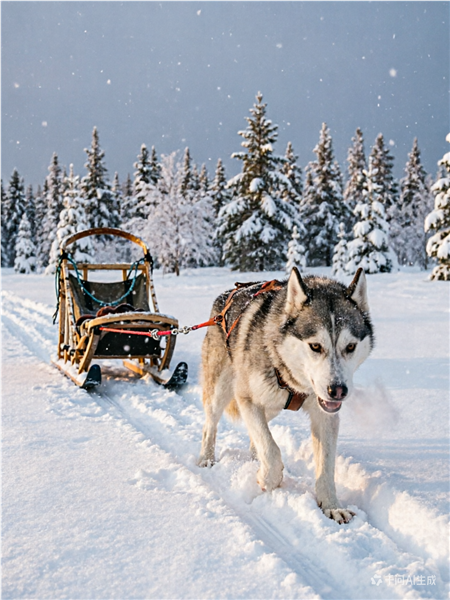
Husky, the scientific name of Siberian sled dog, is one of the oldest dog breeds in the world. Their direct ancestor was the Eastern Siberian wolf, which lived in extreme cold regions. In order to survive and migrate, the Chukchi people domesticated these wolves. After countless generations of breeding, they formed the husky that is now full of energy and has amazing endurance. Although the appearance is no different from that of a domestic dog, the husky still retains a large number of wolf characteristics at the genetic level, of which howling is the most prominent.
For wolves, howling is a complex and efficient long-distance communication tool. It can travel several kilometers across vast forests and snowfields. Wolves use howling to achieve multiple purposes: gather scattered group members, declare territorial ownership, identify individuals (each wolf's howling is as unique as a fingerprint), coordinate hunting operations, and even emotionally express loneliness or excitement. This sound is low and long, can bypass obstacles and spread farther, and is more suitable for use in an open living environment than short and sharp barking.
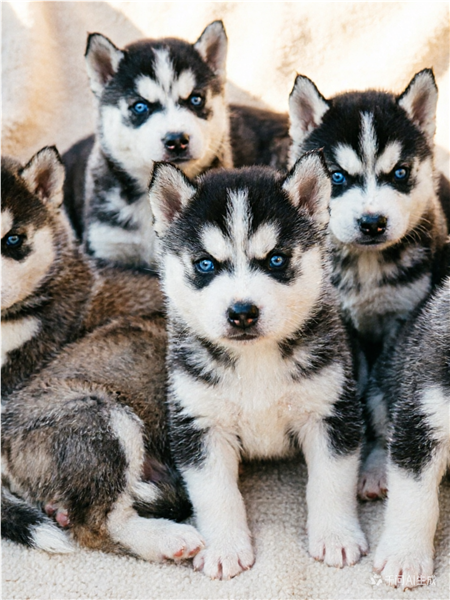
The husky inherited this instinct. This ancient "communication protocol" is automatically activated when they feel lonely (such as their owner has been away from home for a long time), hear sounds similar to howling (such as music, sirens), try to call out to their "companions"(it could be you or the imaginary dog pack), or are in high spirits. This is not learned, but an innate, genetically encoded pattern of behavior.
2. Howling vs. barking: The essential difference in functionality
To understand huskies, we must first understand the fundamental difference between Howling and Barking in canine behavior.
Howling: As mentioned earlier, it is mainly a long-distance, social communication method. It focuses more on "connection" and "broadcasting", and the emotional color can be neutral convening or emotional expression. The sound is characterized by rich tone changes and long duration, and is designed to spread far away.
Barking: More of a short-range, warning or expression of excitement about immediate events. For example, dogs in home care will bark at approaching strangers as a warning; dogs will also bark briefly when they are excited to play. This is a characteristic that many dog breeds have been enhanced and selected more recently (after living with humans) to respond to specific events in the human living environment.
Huskies are not completely unable to bark. They also make "purr" sounds and short "wow" sounds, but typical, continuous "barking" sounds are relatively rare. This is because in their primitive living environment, what is needed is to maintain teams and long-distance communications, rather than issuing high-frequency warnings about specific targets in front of them. Their "working language" is howling.
3. Environment and domestication: Habits that have not been completely "transformed"
Compared with other dog breeds, the husky's domestication purpose is very special. They were bred to pull sleds in harsh polar environments, requiring strong endurance, teamwork and obedience to instructions rather than vigilance or guarding. The Chukchi people don't need them to bark like watchdog dogs. Instead, they need them to remain quiet to save energy and keep team contact through howling during snowstorms.
Therefore, during the long breeding process, the trait of "loving barking" has not been deliberately strengthened, and may even have been inadvertently screened out. Howling, as an important skill for team coordination and survival, has been preserved intact. This makes the modern husky a dog with strong "barking inhibition" but strong "howling instinct". When they are kept as pets in apartment buildings, there is an interesting collision between this ancient instinct and the modern living environment.
4. Common scenes that trigger howling
Understanding trigger points can help owners better manage and understand:
- Auditory trigger: This is the most common cause. High-frequency, long sounds, such as sirens, ambulances, musical instruments (especially sax and trumpets), the howling of other dogs, and even the climax of some songs, can make the Huskies feel that "there is a companion in the distance." Calling ", triggering their responsive howling.
- Separation anxiety: Huskies are social animals and are very dependent on the "group"(i.e., your family). When their master leaves and they feel abandoned by the group, they may try to "call" their master home by howling to express loneliness and uneasiness.
- Emotional expression: Extreme excitement (such as when you first get home), anxiety, and sometimes even boredom can be vented through howling. Some huskies will howl twice when they are particularly happy.
- Territory declaration (relatively weak): Although not as strong as wolves, some huskies also declare their presence by howling when they hear the sounds of other animals outside the window or perceive "invasion."
5. How to deal with the husky's howling? Understanding is better than stopping
First of all, it needs to be clear that howling is the nature of huskies, and it is neither realistic nor a "dog's way" to completely ban it. Our goal should be reasonable management and avoid influencing others at inappropriate times (such as late at night).
- Investigate the reasons: Observe and record the time and scene of its howling, and first judge whether it is lonely, responding to the sound or excited.
- Adequate exercise and companionship: A husky whose body and brain are fully depleted will be much quieter. Ensure at least 1-2 hours of high-intensity exercise (running, pulling, agility training) and mental games (sniffing pads, leaky toys) every day.
- Desensitization training: Desensitization training can be carried out for auditory triggers. For example, when playing a sound that triggers howling (such as a siren recording), start at a very low volume and reward snacks as long as it does not howl, and then gradually increase the volume to get it used to it and think that the sound means that something good is happening.
- Provide a sense of security: For howling caused by separation anxiety, separation training needs to be carried out gradually, starting from a few minutes away and slowly extending the time. Leaving behind clothing with your scent, providing a safe nest, playing soothing music or using a pheromone diffuser may help.
- Command substitution: Try teaching it a "quiet" or "quiet" command. When it starts howling, issue commands in a calm tone and reward it immediately the moment it stops. But this requires a lot of patience.
- Don't punish: Slapping or yelling will only increase its stress and confusion and may make the problem worse. It doesn't think howling is a "mistake", it's just expressing itself.
If the howling problem is extremely serious and cannot be improved by the above methods, it is recommended to consult a professional veterinary behaviorist to rule out potential health or serious psychological problems.
6. Howling is the unique charm of the husky
Finally, let us look at this matter from a different perspective. The howling of huskies is a living fossil of their unique bloodline and long history. Behind each "Awl ~~" is connected to the Siberian ice field, the galloping sled team and the ancient wolf pack. This is their innate language, a echo of their glorious past as working dogs.
When you understand this, the long howling may no longer be an annoying noise, but become a deep poetry. It reminds us that the blood of wildness, loyalty and team spirit still flows in the body of this hairy child who sometimes commits mistakes and sometimes demolishes his family. Accepting their howling and allowing them to express their nature within a reasonable range is our greatest respect for this ancient dog breed.
So the next time your husky sings to the moon or sirens, listen quietly. It is a wolf memory engraved in DNA that has traveled through thousands of years, and is singing softly in your living room through it.