Poor training compliance? An efficient combination of clicker, reward snacks and dog training ropes
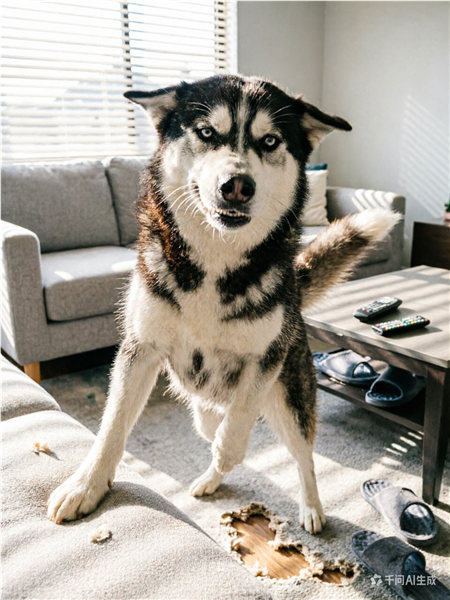
Every dog owner hopes that his dog is obedient and obedient, and can integrate well into family life. However, reality is often very bony-it turns a deaf ear when calling names, it looks blank and even turns its head to run when giving orders, and when going out for a walk, it pulls a rope and runs around... These "poor obedience" performances not only make the owner feel frustrated, but may also pose safety hazards. Faced with training problems, many owners feel that they have no way to start, or their methods are scattered and unsystematic, resulting in poor results.
In fact, improving dog obedience is not without rules. If a worker wants to do something well, he must first sharpen his tools. In the field of scientific dog training,clicker tablets, reward snacks and dog training ropes are considered to be three core tools that are efficient and complementary. They correspond to the three training pillars of communication marking, motivation and behavioral guidance respectively. Using any tool alone has its value, but if you can understand its principles and cleverly match and combine them, you can often produce an amazing effect of "1+1+1>3" and systematically solve the problem of poor dog obedience.
This article will provide an in-depth analysis of these three tools and provide a practical and efficient combination plan to help you and your dog establish a clear, pleasant and solid communication and obedience relationship.
Part 1: In-depth analysis of the three core tools
1. Clicker: Accurate "Behavior Camera"
What is clicker training? The clicker training originated from marine animal training and is a positive reinforcement training method based on the principle of "operating conditioned reflex". The clicker itself is a small device that makes a crisp click. Its core role is not a command, but amark. At theprecise momentwhen the dog performs the behavior you want, you press the clicker, make a "click" sound, and immediately give a reward (usually a snack).
Why is it so effective? In training, timing is everything. Dogs 'brains need to connect "behavior" with "consequences". Human language and movement feedback often has delays, while the sound of the clicker is unique, consistent and instantaneous. It can accurately "capture" and mark the moment the dog does the right thing like a camera shutter. This removes the dog's confusion and makes it quickly understand: "Oh! The action I just did brought good things!" This greatly accelerates the learning process.
Selection and Getting Started:Choose a clicker that has a clear sound and is easy to press. When first introduced, you just need to "recharge": press the clicker in front of the dog and immediately give it a delicious snack. Repeat it more than a dozen times, and the dog will equate the "click" with "good things come." Since then, the sound of clicker became a powerful communication signal.
2. Reward snacks: the "super fuel" that drives learning
The role of snacks in training:Snacks are theprimary boosterin positive reinforcement training and an intrinsic source of motivation that most dogs cannot resist. It is direct, efficient, and can quickly establish a connection between behavior and positive outcomes. High-quality reward snacks are the key to maintaining dog training interest and motivation.
How to select and use scientifically?

- High value versus low value:Ranking snacks. Ordinary dog food or biscuits can be used as low-value snacks for daily use, while small pieces of boiled chicken breast, cheese, special training soft grains, etc. are high-value snacks used to learn new skills or in environments with greater interference.
- Appropriate size:Training snacks should be small rather than large. It is better to swallow them in one bite and not affect continuous training. They are usually the size of soybeans.
- Health first:Choose natural snacks with few additives and count them into total daily calorie intake to avoid obesity.
Tips:Rewards must be cashed quickly after the mark (clicker sound). As the behavior consolidates, it can gradually transition from "every time reward" to "random reward", which can in turn make the dog more expectant and behave more long-lasting.
3. Dog Training Rope: An Extended Arm for Safety and Guidance
Re-understanding of dog training ropes:The core function of dog training ropes (usually referred to as P ropes or training leashes of specific structure) is not to "strangle" or "drag", but tocommunicate and guide. It is a gentle body language reminder tool when dogs have not yet fully understood instructions or cannot control themselves under interference.
The principle and correct use of P rope:The design of P rope (also known as training rope and control rope) allows the rope loop to generate even and short-term pressure when the owner gently pulls it, simulating that the mother dog gently holds the puppy's neck with her mouth. The feeling of reminding. The key isinstantaneous lifting-relaxation, not continuous tightening. For example, during training to "follow", when the dog pours forward, use a quick, slight lift (which may also be accompanied by a "click" mark and a snack reward to stop), and then immediately loosen the rope. When it returns to the correct position, immediately mark it with a clicker and reward it. The rope is the reminder, and the reward is the goal.
Important warning: Besure to learn to use it correctly! Incorrect use of P rope may cause injury. It is not suitable as permanent equipment for daily walks and is mainly used for specific training stages. Extreme caution or consult a professional for short-nosed dogs or dogs with sensitive trachea.
Part 2: Effective collocation combination actual combat training method
Having understood the individual tools, we now combine them and apply them to specific compliance training scenarios.
Scenario 1: Consolidate "Recall" Training (Come)
Goal:Under any circumstances, dogs can quickly and happily run back to their owners when they hear the call.
Tool combination:clicker + ultra-high value snacks + long rope (initial stage).
Steps:
- Start in a low-interference environment:At home, when your dog looks at you or moves towards you, immediately say the command "Come on!" Or name, press theclicker themoment it starts to move towards you, and when it reaches you, give itultra-high value snacks and warmly stroke it.
- Add a long rope:In quiet outdoors, use a long rope of about 10 meters. Let the dog explore within a certain range. Call it and if it responds, mark the reward. If it doesn't respond, you can use a long ropeto gently guide the direction (not pull it hard). Once it moves towards you, mark it immediately and reward it when it comes back.
- Deal with distractions:Call in advance when there is slight interference (such as someone in the distance). After successfully returning, you will be given a "reward party"(multiple snacks in a row). Always make "coming back" the happiest thing.
- Gradually remove tools:Try not to use clicker, only password and reward; then try not to use long ropes in a safe environment, but always have snacks in your pockets for random rewards to maintain the reliability of your behavior.
Scenario 2: Correct the rush and learn to "Loose Leash Walking"
Goal:During walking, the dog can walk leisurely on the owner's side, with the rope in a loose "J" shape.
Tool combination:clicker + ordinary/high-value snacks + P rope/fixed-length rope.
Steps:
- Establish the concept of location:At home, guide the dog to your left or right side with snacks. When his shoulders are parallel to your legs, press theclicker and givethe snack. Repeat until it understands that there is something good about this position.
- Indoor mobility exercise:Guide the dog in the right position, you take a step, and if it can follow and maintain its position, mark the reward immediately. Gradually increase the number of steps.
- Outdoor combat and P rope guidance:Start on quiet roads. Wear theP cord (make sure it is in the correct position, behind the ears and under the jaw). After setting off, focus all your attention on the dog.
- Mark rewardsfrequently when the rope is loose and the dog is in a good position.
- When it starts to rush forward and the rope tightens, immediatelypause or turn backwards, and use the P rope to give aquick, slight lifting prompt (the action should be as fast as turning a book), and then relax immediately.
- When it comes back to you because you change direction, or notices the rope is loose,immediately mark it for paying attention to you or returning to position and reward it.
- Key:Dogs learn from the process of "tightening the rope-being prompted-returning to slack-getting rewarded": Staying slack can move forward and be rewarded. A rush will only pause the walk. Your patience and consistency are crucial.
Scenario 3: Establishing "Stay" and "Wait"
Goal: Thedog can stay in a designated position under command until released.
Tool combination:clicker + snack + ordinary rope (as a safety backup).
Steps:
- Start instantly:Sit the dog down, stretch out your palm to make a "stop" gesture, and say "wait". Hold for a second, press theclicker, then givethe snack and say the release word "OK".
- Extend the time:Gradually lengthen the waiting time after gestures and passwords, from 1 second to 3 seconds, 5 seconds, 10 seconds... During the waiting period, you can calmly give verbal encouragement "OK, wait". Mark rewards at planned points in time.
- Add distance:Say "wait" first, then you take a step back and immediately return to where you were awarded. Gradually increase the number of backward steps.
- Add a leash as insurance:During outdoor training, you can step on the end of the leash gently to prevent the dog from suddenly running away as you increase the distance. But this is just a safety net, and the focus remains on rewarding it for success. If it moves, calmly bring it back to where it started, start over, and reduce the difficulty (shorten the time or distance).
- Challenge and generalization:Finally practice with or without leash, in different locations, and with slight interference, so that the dog understands that "wait" applies anywhere.
Part 3: The golden principles of collocation and common misunderstandings
golden principle
- The marking (clicker) must be precise:only mark the behavior you really want. The slightest difference in timing will make the effect thousands of miles false.
- Rewards must follow closely:snacks must be in place within 1-2 seconds of the click. Establish a solid "mark-reward" chain.
- The rope is a reminder, not a punishment:any use of the rope (especially the P rope) should be a short, clear transmission of information, followed by immediate relaxation. Constant stress will only make the dog resist or numb.
- Set a path to success:Break down complex behaviors into small steps to ensure that your dog can successfully receive rewards more than 80% of the time and maintain his enthusiasm and confidence.
- Keep your workout pleasant and short:5-10 minutes each time, multiple times a day, far better than a marathon of frustration training. It ends when the dog is still hungry.
Common misunderstandings to avoid pits
- Myth 1: Overrely on snacks and ignore other rewards. Gradually replace some snack rewards with touches, toys, verbal praise or life rewards (such as going out and playing).
- Myth 2: Emotional use of tools. Never pull hard on the rope when you are angry or depressed. Tools are calm communication media, not channels for venting emotions.
- Myth 3: Be eager for success and skip the basics. Without solid indoor and low-interference environment training, if you directly challenge difficult environments, you are doomed to failure.
- Myth 4: Confusion of "P rope" and "suffocation chain". Correct use is instant pressure and immediate release, while incorrect use is continuous tightening, which is extremely harmful.
- Myth 5: Ignore individual differences in dogs. For dogs with low food motivation, toys or petting may be needed as the main reward. Choose the right tools and motivators for your dog.
conclusion
Training dogs for obedience is essentially a co-development of trust, communication and cooperation. The clicker, the reward snack, and the dog training rope are not magic in themselves. Their power comes from the scientific training principles behind them and the loving persistence and wisdom of their owners. When you master their respective characteristics and learn to combine them efficiently, you have a powerful "communication combination fist".
Remember, the best training is to make your dog feel that learning is fun and rewarding. There will be setbacks and setbacks in the process. Please be patient and celebrate every small progress. When you see that your dog's eyes light up because it understands your intentions, and when it can follow your guidance calmly and confidently, all your efforts are worth it. From now on, pick up your tools, use scientific methods and a positive attitude to start a smoother and more tacit compliance training journey between you and your dog!
(The content of this article is intended to provide general dog training guidance. For dogs with serious behavioral problems, it is recommended to consult a certified professional dog behavior trainer.)